

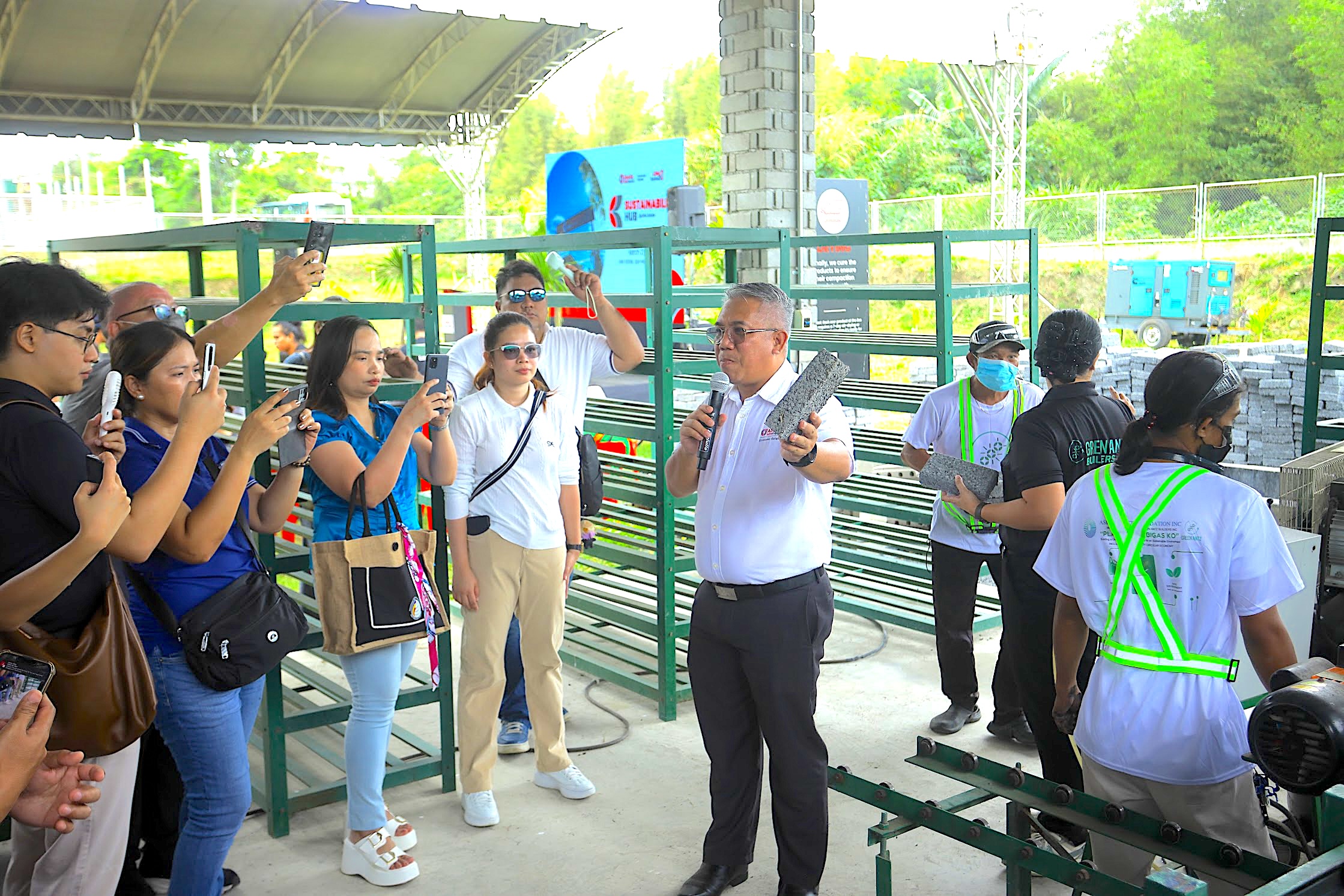
At the LIMA Estate Sustainability Hub, eco-bricks made from recovered materials demonstrate how circularity can turn waste into useful resources while supporting sustainable, resource-efficient communities
As the country’s growth centers place increasing pressure on water, energy and waste systems, the Aboitiz Group is deepening its circular economy approach to help businesses use resources more efficiently, strengthen resilience and create long-term value for the communities and industries that depend on them.
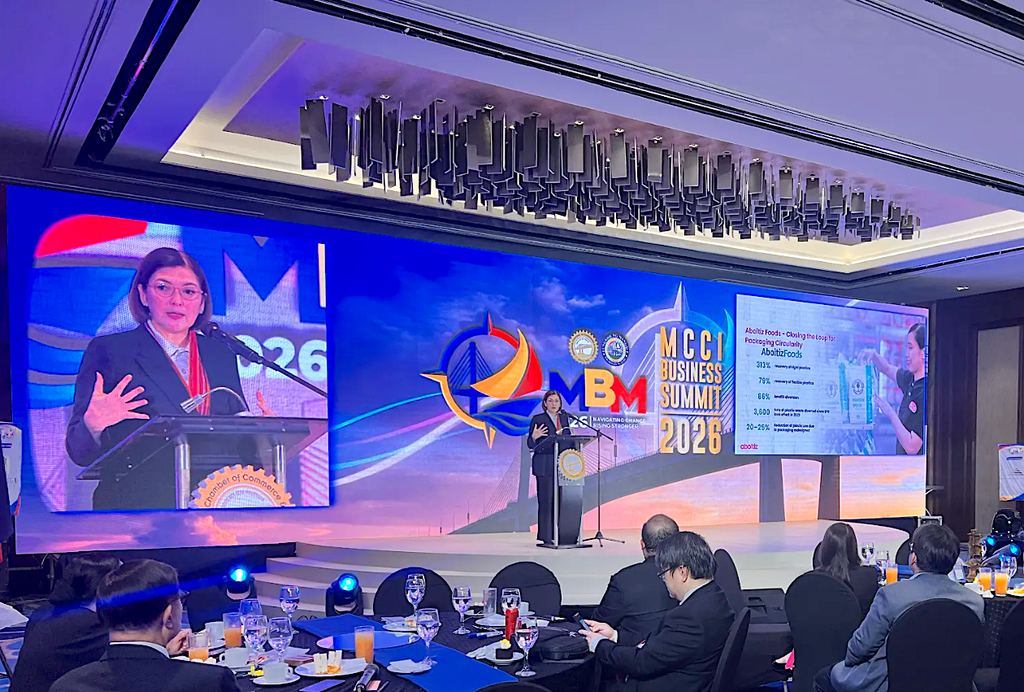
Speaking at the Mandaue Chamber of Commerce and Industry (MCCI) Business Summit 2026, Aboitiz Equity Ventures (AEV) Chief Reputation and Sustainability Officer Ginggay Hontiveros-Malvar highlighted how Cebu reflects a challenge shared by the Philippines’ fastest-growing economic hubs. While rapid expansion in commerce, tourism, and manufacturing brings vital investment, it simultaneously intensifies pressure on local solid waste systems and freshwater supplies.
To address these pressures, Aboitiz is looking beyond improvements within individual businesses to identify opportunities where materials, infrastructure and capabilities can create value across industries. Its diversified portfolio provides a foundation for building circularity across businesses rather than within isolated operations.
“Circularity is not just about recycling or waste management. It is about redesigning business ecosystems so that one company’s waste, assets, energy, water, logistics and capabilities become another company’s input,” Hontiveros-Malvar said.
For Hontiveros-Malvar, Cebu reflects a challenge increasingly shared by the country’s fastest-growing economic centers. Its expansion as a hub for commerce, tourism and manufacturing has brought more investment and economic activity, but has also intensified pressure on solid waste systems and freshwater resources.
An example of this ecosystem approach in action is a circular value chain bringing together Coca-Cola Europacific Aboitiz Philippines (CCEAP), PETValue Philippines, and Republic Cement.
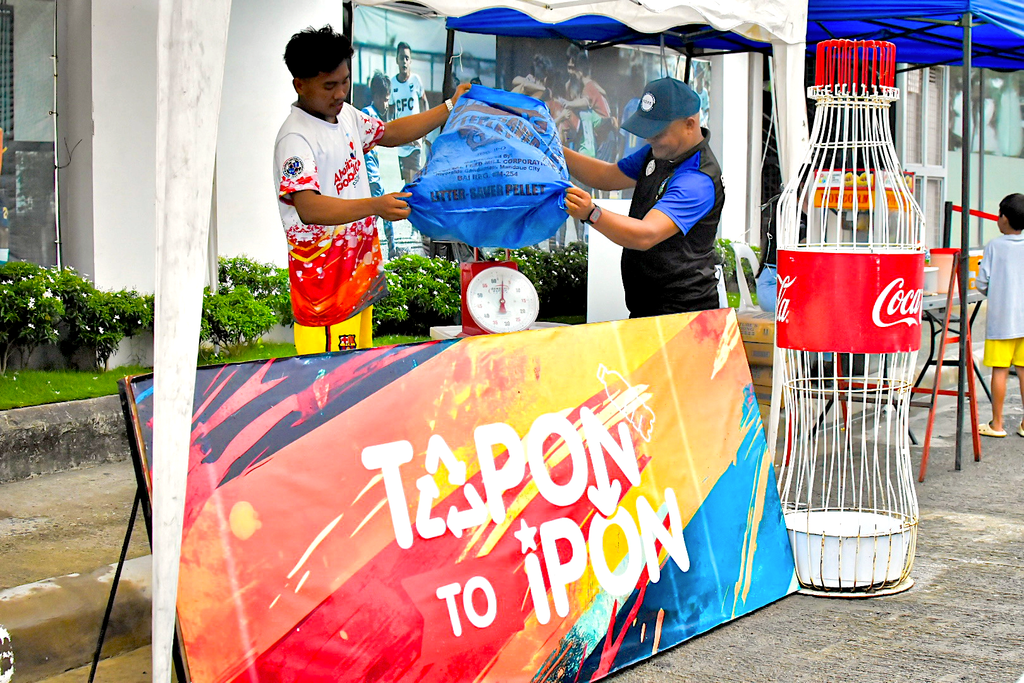
Through CCEAP’s Tapon to Ipon initiative, post-consumer PET bottles are collected and processed by PETValue into food-grade recycled PET to produce new beverage bottles. PETValue recently reached a landmark milestone of one billion recycled bottles produced, while select 190ml Coca-Cola PET bottles are now manufactured using 100% recycled PET (excluding caps and labels).
Materials that cannot re-enter bottle production—such as specific caps and labels—are routed to Republic Cement for co-processing as alternative fuel in cement manufacturing. Working alongside more than 200 public and private partners, Republic Cement has diverted over 1.5 million metric tons of residual plastic waste from landfills to date.
Even community events serve as collection touchpoints. During the Aboitiz Football Cup, CCEAP’s Tapon to Ipon program actively segregates and recovers event-generated waste, demonstrating how shared infrastructure can keep materials in productive use while reducing reliance on virgin resources.
“Circular economy succeeds best when industries work together,” Hontiveros-Malvar emphasized. “No single company can create this system alone.”
Beyond keeping materials in circulation, Aboitiz is applying this ecosystem model to the natural systems sustaining Cebu’s economic growth. Through CarbonPH, the Group has committed to a 40-year initiative to protect and manage approximately 71,000 hectares of forest and watershed landscapes across the province. By restoring these critical catchments, the program aims to improve groundwater recharge and safeguard long-term water supply for surrounding communities and industries.
“Circular economy…is about actively regenerating the natural resources that sustain economic growth,” Hontiveros-Malvar concluded.