
Reading articles about energy-efficient homes makes for interesting mind fodder. When the time comes to either build or buy a house, however, things change because these concerns do not seem to be on top of the list of either architects or developers (unless you opt for an AboitizLand property, of course). Eventually, the ideas drop to the bottom of the list of priorities, and eventually do not get done.
Having just recently built a house, I would like to share some things you can do to make your new, or existing, house just a little bit more energy smart, depending on how much effort and resources you are willing to expend.
Involve the kids
A great start is to help your young children— should you have them—understand the importance of turning lights on and off. If you follow traditional Philippine construction standards with switches at 1.5 meters, your toddler will never comprehend the responsibility of turning lights off for the simple reason that 1.5 meters is unreachable to them. Place all switches at one meter and opt for big switches that toddlers will find easy and fun to manipulate. Habits learned young have more of a chance of becoming permanent.
Catching rain
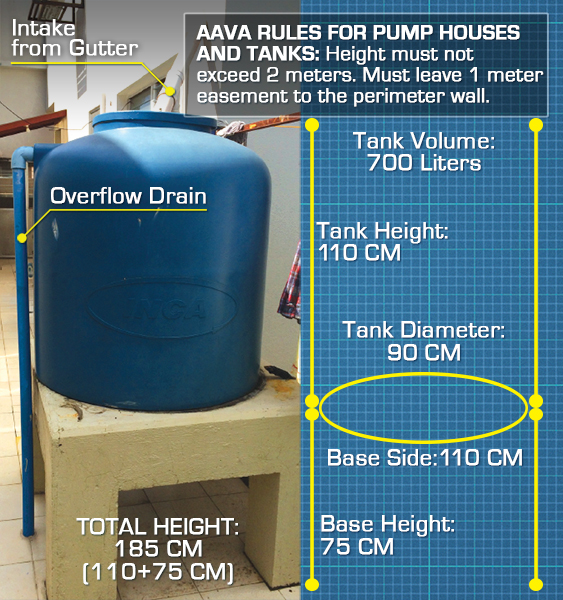
Rain water is a precious and clean resource that we all partially gather (because our roofs are natural catchment areas) and then dump into the sewage system. Most of the hard work is already done, then we forego the last mile of storing and using the water for domestic needs. By simply tapping into the gutter drain (or a few of them) and channeling by PVC pipe into a cistern, rainy days become happy days because you know you will reduce your use of expensive water from your utility. Reducing dust accumulation in the cistern is easy just using some rudimentary filtration, flotation or draining apparatus. I personally go for above-ground tanks in order to avoid the use of a pressure pump and to facilitate cleaning of the vessel. This water is great for cleaning the house, washing the car and watering the plants.
Waste management
Trash reduction is another wonderful way to make for a greener home. Provided you do not live in a condominium and have a little patch of land around you, you can compost, which is using “nature’s services” for your benefit. The internet resources will yield different ways of composting and you can choose the one that suits you best. I can tell you from experience, though, that not producing any wet organic trash at home provides not just olfactory benefits but minimizes vermin infestation as well.
Sun-powered savings
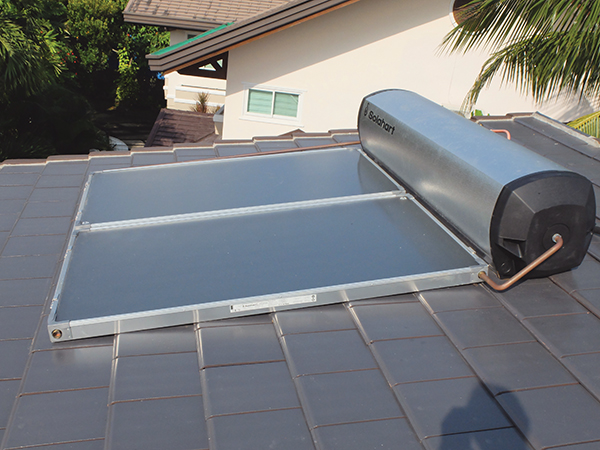
Solar panels for hot water (“solar water heating”) and electricity (“photovoltaic” or “PV”) have many benefits but entail some investment. Solar water heating saves you money in two ways. It cuts down on the electricity otherwise used to heat water and also reduces money paid up front to the distribution utility for the transformation capacity needed for powerhungry multi-point heaters (3,000 to 6,000 watts each) or centralized water heaters.
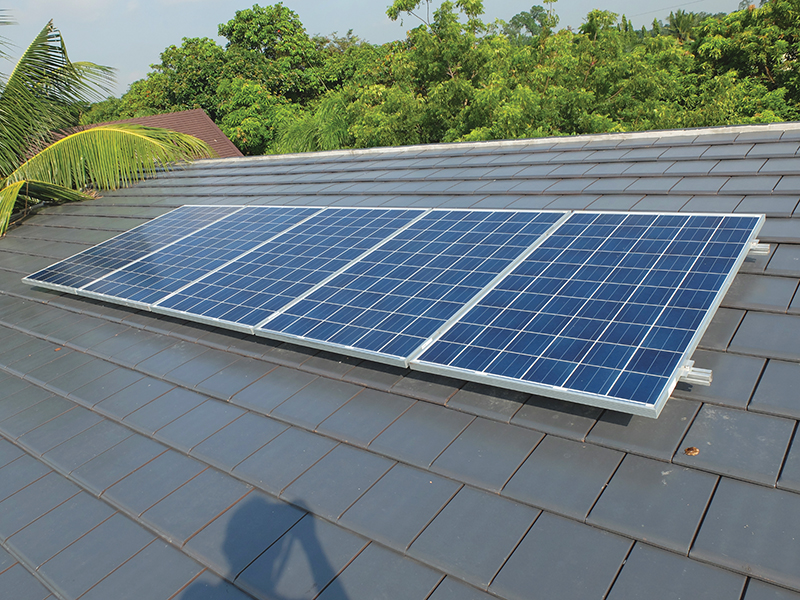
Solar PV generates electricity for own use and whatever is generated but not used is sold to the distribution utility via the net metering program which you may avail by signing a few forms and submitting some documents. When combined with a peak/off-peak tariff structure, it forms a formidable one-two punch to reduce your electric bill by harnessing the free resource that is the light of the sun and displacing peak power from the bill.
As you can see, no genius is required. Just a little bit of imagination!