

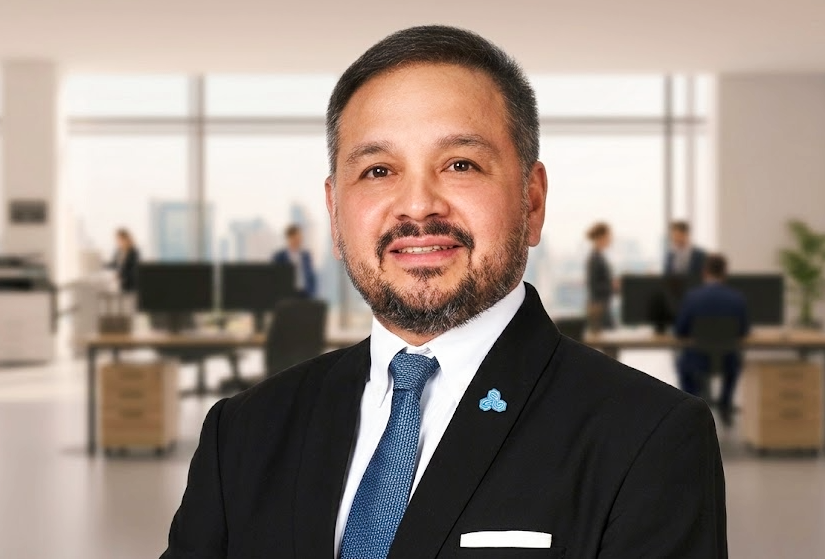
by Celso C. Caballero III, AboitizPower’s Transition Business Group President
From 2016 to 2025, the Philippines’ power system peak demand grew at an annual average growth rate of 4.7%, according to data from the Department of Energy. That growth continues to occur across Luzon, Visayas, and Mindanao, driven by a rising population, an expanding economy, and new demand from areas made increasingly connected by the grid.
Stripping away the jargon, this growth is mostly the equivalent of millions of Filipino households and businesses adding an air conditioner, a computer, or a refrigerator, many for the first time.
Behind that uptrend is a story of investments expanding along industrial corridors, inter-island power exchanges across straits, and towns rising from economic hardships.
This is our collective national challenge: keeping the lights on for a country that’s growing fast. These are not problems to be managed, but signs of progress that need to be catalyzed and supported. This is what a human-centric energy transition calls for; meaning a transformation that helps lift Filipinos out of poverty and offers them an opportunity to reach comfort or even prosperity.
As a leader at Aboitiz Power Corporation (AboitizPower) — where I head its Transition Business Group to drive a human-centric energy transition while safeguarding national energy security — here are three things that we think will move the needle for our country’s electric power system.
First, the Philippines needs firm capacity. We need reliable baseload power plants to keep the grid stable while renewable energy scales up. Baseload is the steady, reliable minimum amount of electricity needed to keep the power grid running. As power demand grows and intermittency from variable renewable energy capacities increases, so does the need for baseload to protect consumers from blackouts.
In the Visayas, Therma Visayas Unit 3 is adding 150 megawatts of reliable baseload to an island grid that needs it.
Second, the country needs more energy storage. These are the technologies, like batteries or pumped-hydro storage, that help with the variability of renewable energy by storing excess power, which is then released when needed to augment supply or improve the quality of the electricity in the power system.
With more renewable energy supported by energy storage, the more the grid can accept the variability and intermittency it brings.
To help with grid stability, we broke ground on a 30-megawatt hybrid battery energy storage system (BESS) in the Mactan Economic Zone and a 60-megawatt standalone facility at the Naga Power Plant Complex in Cebu, giving new life to legacy thermal assets by effectively turning them into modern energy storage. In Mindanao, a 49-megawatt BESS is also being integrated into Therma Marine’s power barge in Nasipit, Agusan del Norte.
Third, these power assets require a talented and competent workforce who will steward it. The energy transition will not succeed through infrastructure alone. It will depend on engineers, technicians, and operators who can effectively and safely manage a system growing more and more complex by the year.
Together with JERA, Japan’s largest power generation company, AboitizPower established the Global Technical Center of Excellence, developing technical talent by combining expertise with leadership, safety, and adaptability. It also serves as a hub for knowledge exchange among industry, government, and academe, helping build the workforce that will help carry the energy transition forward.
None of this is about any single organization’s ambition. It should be a collective effort that is centered around how the Philippines can grow and develop by powering human progress with sufficient, reliable, and affordable power.
We need a human-centric energy transition to drive socioeconomic development; one that would maximize the utility of electric power to change lives for the better. That way, many can sustain their way of life, while many more are afforded the chance to better their conditions.
Ultimately, our energy transition is about more than just the transition of electrons or technology; it is about building an energy system that enables and sustains the well-being and prosperity of the Filipino people.