

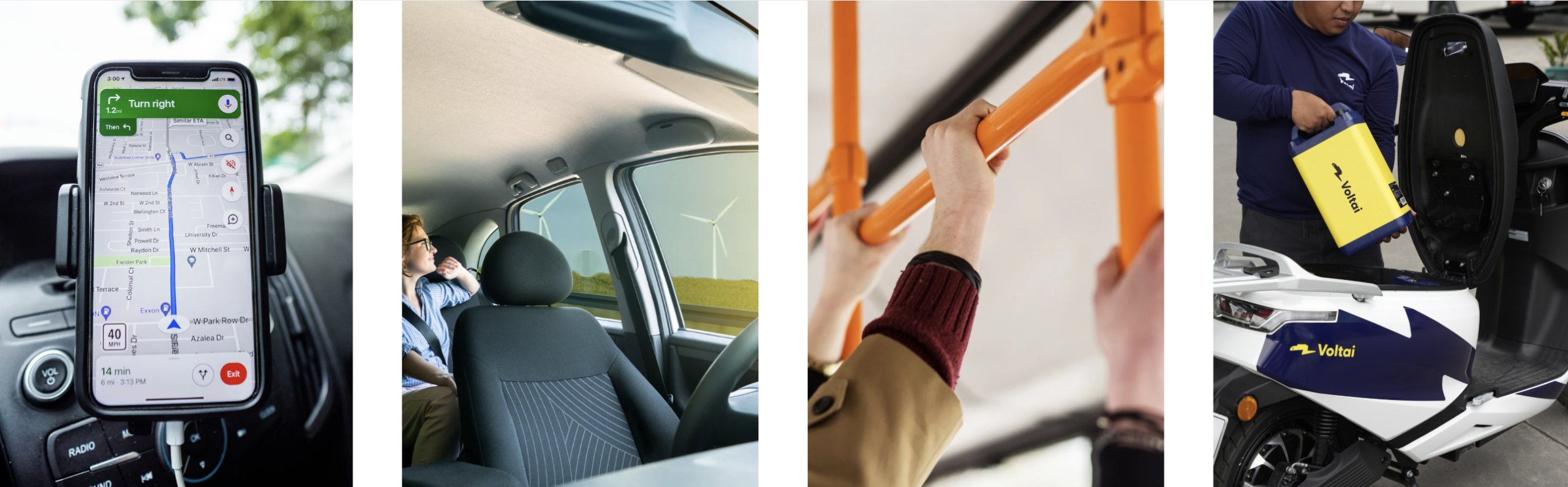
CASE is an acronym among automotive and transportation industry circles, which stands for Connected, Autonomous, Shared, and Electric mobility.
by Suiee Suarez, VP for Corporate Affairs, AboitizPower
Perhaps the most exciting and observable energy transition is the one that’s occurring in our roads. The Filipino passenger, especially those in metropolitan areas, might have already observed and even directly experienced the influx of more and more electric vehicles (EVs) this year more than ever — from the electric tricycles and buses to the new EV fleets of ride-hailing companies.
The numbers tell part of the story. In the first nine months of 2025, hybrid cars, battery EVs, and plug-in hybrid EVs accounted for 6.02% of total domestic car sales, surpassing earlier projections. At the global level, the share of EV’s in all car sales has been steadily increasing, from about 1/2 of a percent in 2014 to 20% in 2024.
The rising numbers represent growing momentum towards, not just the energy transition targets, but also the gradual attainment of the CASE concept for mobility, particularly in the automotive and transportation industries. The first time I heard of the CASE concept was over a decade ago from Shell’s then-Chief Scientist Mobility Wolfgang Warnecke, then again soon after from mobility experts from Toyota. CASE, which has been conceptualized with the idea of a “smart city”, is an acronym, which stands for:
- “Connected”, or how cars are linked to the internet and accompanying software, opening them up to new features like detailed maps, satellite imagery, and real-time traffic updates;
- “Autonomous” or “Automated” driving, or how vehicles can self-park or self-brake, or even drive themselves with little to no human intervention;
- “Shared” mobility, or public transportation services like jeepneys and buses, but also the fleets of cars made available for booking on a ridesharing or car sharing basis via mobile applications; and
- “Electric”, or vehicles being powered by electricity, which is an alternative to utilizing traditional internal combustion engines and fossil fuels.
Just think about the impact of autonomous or shared cars to an aging society or the huge efficiency gains from the electrification of mobility. Right now, Filipino drivers already use navigation apps which can suggest various routes to their destination. On the other hand, Filipino passengers today also enjoy a variety of transport options, which now include even two-wheel motorcycle taxis. In fact, it is anticipated that most of the EV growth in the near term would come from two- and three-wheelers.
But while the increasing penetration of EVs in the Philippines and the rest of the world is certainly a good sign, there is still a long way to go. Transitions, especially at a societal, much less at a global level, are difficult. They are hardly simple, homogenous, nor quick, and occur at different paces for different places (just compare the global average of EV penetration to that of the Philippines’ cited earlier). The pace of progress will largely depend on how affordable, attainable, and practical the EVs and the technologies are, relative to their conventional counterparts.
Today, EVs are much more efficient in converting energy into motion, with the cost per kilometer decreasing from a factor of 5 for internal combustion engines to 3 for hybrid and 1 for electric drivetrains. But just imagine the current limitation in public EV charging stations — a challenge that is further exacerbated once the factors of usage, travel range, and carrying capacity enters the picture.
While range anxiety is expected to decrease as charging infrastructure and energy density of batteries improve and expand, remember that larger vehicles have greater usage rates, load carrying requirements, and mileage than motorcycles and passenger cars. It will be a challenge to transition trucks and other heavy goods transport. A chicken-or-the-egg problem presents itself of what would have to scale first: the vehicles or the charging stations?
With the high capital outlays and tremendous efforts required, it would take greater coordination, risk-sharing, appropriate government policies, and other forms of support to make the transition less difficult and less painful. Various forms of innovation in technology, business models, financial instruments, etc. — which already got us to this point — will continue to hold the key to addressing these challenges. Wasn’t it just a few decades ago when smart phones, self-driving cars, and EVs felt more like science fiction than reality?
Most recently, a startup called Voltai under 1882 Energy Ventures, a company of AboitizPower, introduced the Philippines’ first large-scale electric two-wheel battery swap ecosystem for fleet operators. Voltai is an exciting case study in innovation in mobility, hitting 75% of the CASE model. It is “connected” via a dedicated mobile app; “shared” through its business-to-business vehicle and battery lease business model; and “electric”, with 15 battery swapping stations already available and still ready to grow.
In summary, as the CASE concept is gradually becoming more and more real, there is a lot to be excited about in mobility — and rightfully so, considering its uses to individuals, society, and the environment. But like all good things, it won’t progress overnight. While several actors across the different segments of CASE have already made good progress, it will require more innovation and collaboration to get results even greater than the sum of its parts.