

by Suiee Suarez, AboitizPower VP for Corporate Affairs
The first time I tried Pane Toscano, traditional unsalted Italian bread in Florence, I was met with a confusing emptiness. It looked magnificent, but it tasted flat and bland.
I quickly learned the history. Due to disputes between Pisa and Florence in the 12th century, the salt trade was blocked, leaving bakers to make do without the commodity. Making Pane Toscano has since become a tradition that persists to this day.
In that moment, I learned a lesson on value. In a well-stocked kitchen, a pinch of salt is transformative. The moment it hits a simmering stew, for example, it vanishes and dissolves completely to elevate the meal. No one looks at a bowl of soup and says, “Look at the salt.” One simply says, “This tastes good.” The value of salt is felt in its absence, when it renders a meal incomplete.
In today’s modern, hyper-connected lives, people rely on another kind of “salt” — one that flows silently through the walls and under the streets, flavoring every aspect of existence, yet remaining entirely taken for granted until the moment it disappears. Many have become so accustomed to a “meal” of convenience, safety, and connection that many no longer recognize the ingredient itself: electricity.
Salt also isn’t just a condiment for flavor. Biologically, without a baseline amount, the body fails. In the energy sector, this baseline is the “subsistence level” of consumption, or the absolute minimum required for a dignified life; for the use of a light bulb and a fan or the charging of mobile devices.
While we worry about carbon footprints, “luxury emissions” — or those tied to excess –- must be distinguished from emissions emanating from the subsistence level. For over 1.5 million Filipino households living in unenergized and underserved areas, electricity is not an invisible background convenience. It is a glaring, painful absence. In the remote islands or mountain ranges across the archipelago, the salt hasn’t just lost its savor; it was never there to begin with.
This “salt” is the difference between stagnation and survival. Electricity helps preserve the catch of a fisherman in a freezer and the pumping of clean water. It helps maintain the potency and effectiveness of vaccines stored in the fridge. It helps students reach their potential by allowing them to access the internet and support their study time after dark.
For those fortunate enough to live above the subsistence level, the importance of this “salt” is most apparent when it is taken away. As frustrating as it is, a blackout is just a mere inconvenience for many. But it is also a brief taste of a different reality experienced by the unenergized and underserved.
Improving the lives of many underpins the purpose of those in the energy sector. When Christ told His followers, “You are the salt of the earth,” He was emphasizing the potential of man to be a positive influence on the world. After all, salt doesn’t sprinkle itself. It requires a hand to apply it during the meal’s creation. If electricity is the salt of the modern world, then the energy workforce — the engineers, plant operators, electricians, linemen, and meter readers — are the hands that season the meal.
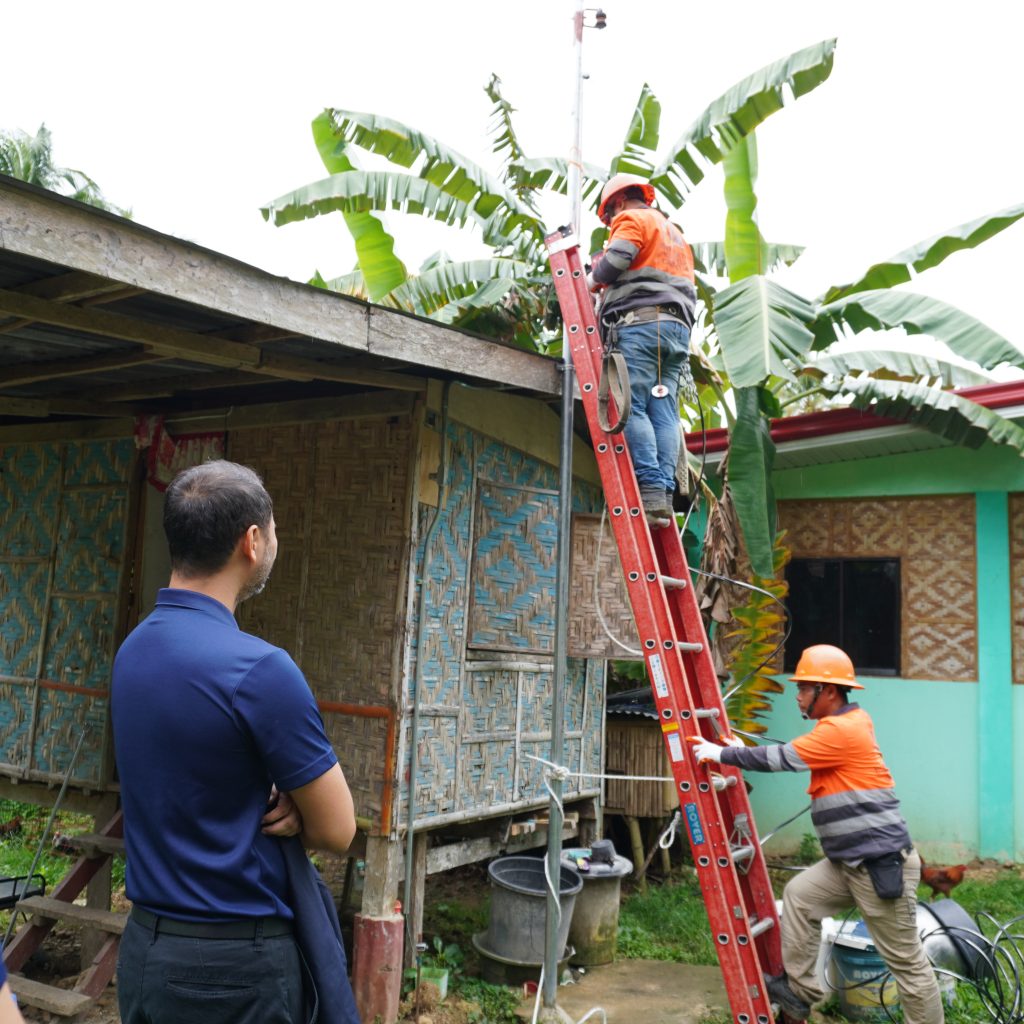
Behind every flick of a switch lies a colossal human effort. In the Philippines, this effort is often heroic: linemen working tirelessly in the wake of a typhoon to restore power; engineers at work during holidays, away from their families, to manage the delicate balance of supply and demand; and electricians trekking into the hinterlands to connect last-mile households. Through their work, these men and women are true “salt of the earth”, working in the dirt, under the sun, and through the mud to ensure that the invisible ingredient keeps flowing.
Since electricity is the “salt” to modern life, it must be used with the same respect accorded to any precious resource. It shouldn’t be wasted. Rather, it should be used wisely to “flavor” people’s lives, not to excess, but to what is sufficient and good.
As electricity and its benefits are enjoyed, the 1.5 million unenergized and underserved Filipino households shouldn’t be forgotten. The mere fact should fuel the resolve to support the total electrification of the Philippines and ensure that the “subsistence level” is reached by every family. That way, living doesn’t become bland due to the lack of access and opportunity.
The energy workforce should also be appreciated for their work of keeping the lights on and ensuring that blackouts don’t become a tradition that persists to future generations. Society should never commit the error of tasting the meal, enjoying its fullness, and forgetting to thank the hands that stirred life and flavor into it with salt.