

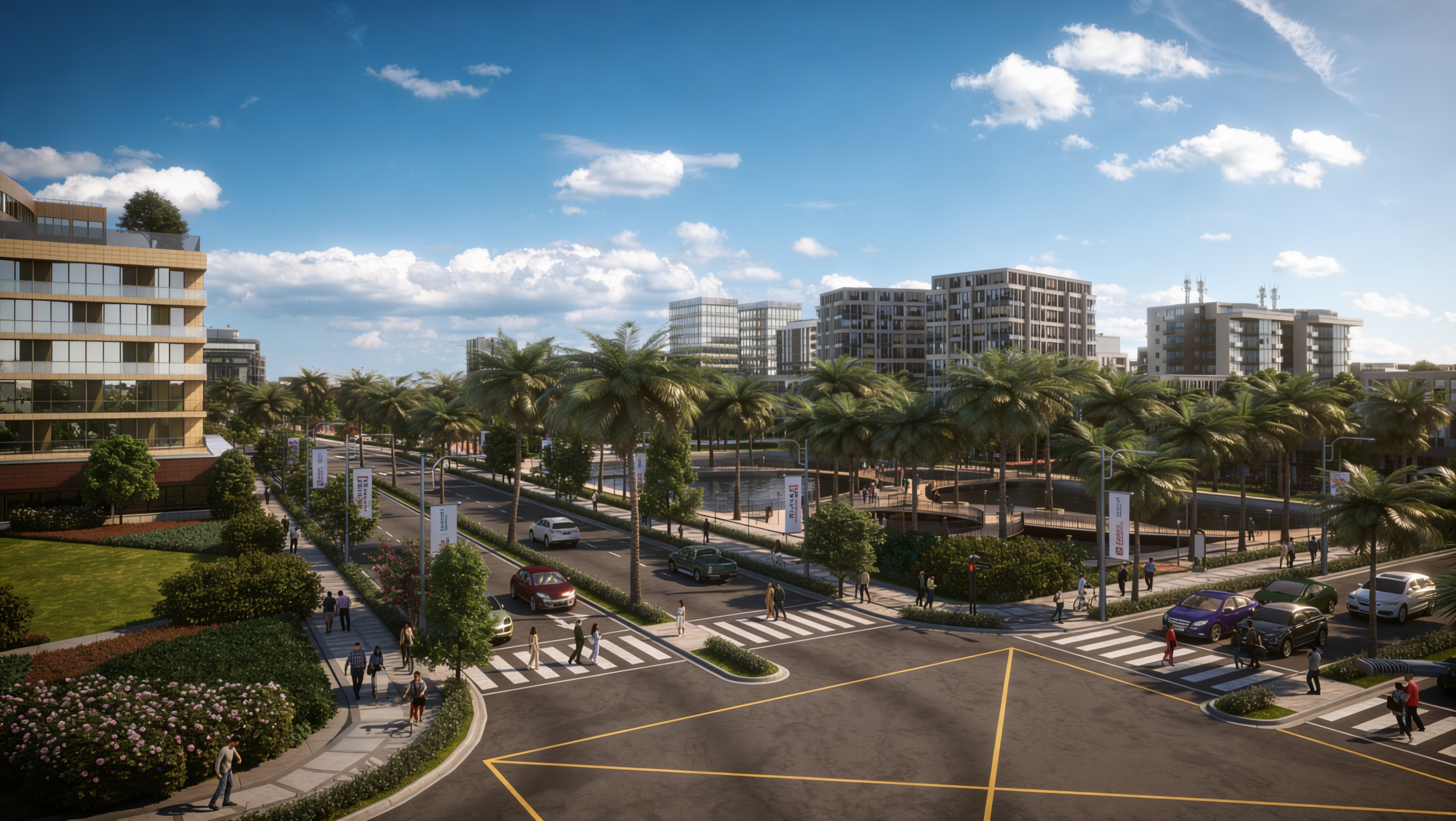
Over the past few days, a familiar frustration has returned to the center of public discourse: traffic, congestion, and the daily cost of simply getting to and from work. For many professionals in Metro Manila, the workday begins well before the first meeting, it begins on the road. The scale of the problem is now hard to ignore: the Philippines ranked as the most congested country in Asia based on the 2025 TomTom Traffic Index, which analyzes GPS data.
The lost time is not just an inconvenience, it is an economic drag. A 2021 study by AltMobility and the Friedrich Naumann Foundation estimates that Metro Manila commuters spend 188 hours a year in traffic, roughly seven days, translating to ₱27.221 billion in economic losses based on average hourly salary in the capital region.
Over time, congestion has assumed a more structural character, shaping patterns of mobility, access, and economic activity across the country’s primary business center. Its effects are felt in daily operations, influencing productivity, talent mobility, and supply chain performance.
As these pressures deepen, companies are re-evaluating where to locate and expand, while investors are placing greater attention on emerging growth corridors that can better support long-term competitiveness. Within this context, integrated, industry-anchored estates are taking on a more central role in enabling a more distributed and resilient pattern of development.

The upcoming opening of the LIMA Gateway and the new STAR Tollway Interchange along the Lipa-Malvar corridor, will further catalize economic and social progress in the province.
LIMA Estate: Designed for a different kind of growth
Situated along the Luzon Growth Corridor in Lipa-Malvar, Batangas, LIMA Estate, the flagship development of Aboitiz Economic Estates, offers a working model of what purposeful decentralization can look like at scale.
Spanning over 1,100 hectares, LIMA Estate is not simply an industrial park. It is a fully master-planned, industry-anchored ecosystem that brings together industrial factories, office towers, commercial centers, and residential communities within a single, well-connected development.
Instead of dispersing these functions across congested urban centers—where employees navigate separate zones for work, services, and daily living—LIMA integrates them into a single, connected environment. The result is a system where operations run more efficiently, and where time lost to movement is significantly reduced for the 75,000 individuals working within the estate.
Accessibility is a key part of this design. LIMA is currently accessible via the STAR Tollway and will soon be further enhanced by the LIMA Gateway and new STAR Tollway Interchange along the Lipa–Malvar corridor, which is expected to improve mobility into and within the estate, including access to Biz Hub. Multiple ingress and egress points along J.P. Laurel Highway also supports more efficient movement throughout the township.
The Villages at LIMA Estate is a 49-hectare masterplanned residential enclave within LIMA Estate, designed to offer secure, future-ready neighborhoods with everyday conveniences and close proximity to the estate’s employment, commercial, and mobility network.
Biz Hub at LIMA Estate: the CBD inside an operating ecosystem
As LIMA’s industrial ecosystem grows, commercial and professional activity naturally grows with it. Biz Hub at LIMA Estate serves as the township’s commercial and business core, supporting the estate’s workforce and community through retail, dining, services, offices, and complementary district components that enable everyday life and business continuity.
More importantly, Biz Hub at LIMA Estate is positioned to be employment-anchored, not lifestyle-led. Its differentiation is structural: it is built on a real economic engine and the daily activity of an operating township.
“Biz Hub at LIMA Estate is not competing on lifestyle alone. It is a central business district built on an operating economy, anchored by jobs and designed for productivity,” said Rafael Fernandez de Mesa, CEO and President of Aboitiz Land and Aboitiz Economic Estates. “When commerce, mobility, offices, and education are planned together inside an industry-anchored ecosystem, you reduce friction across daily life and create a stronger platform for long-term value.”
Jobs-first, talent-ready
Competitiveness increasingly depends on workforce sustainability. Within LIMA, Aboitiz Economic Estates has deliberately built education and housing as core development pillars, recognizing that talent pipelines must grow alongside industry.
Residential communities such as The Villages at LIMA Estate support families and professionals who choose to live near where opportunity is. Industry-based learning partnerships, including Batangas State University, together with Edustria High School and initiatives like Talent Edge Hub, strengthen skills development and create clearer pathways from education to employment, reinforcing the ecosystem that supports Biz Hub’s CBD role.
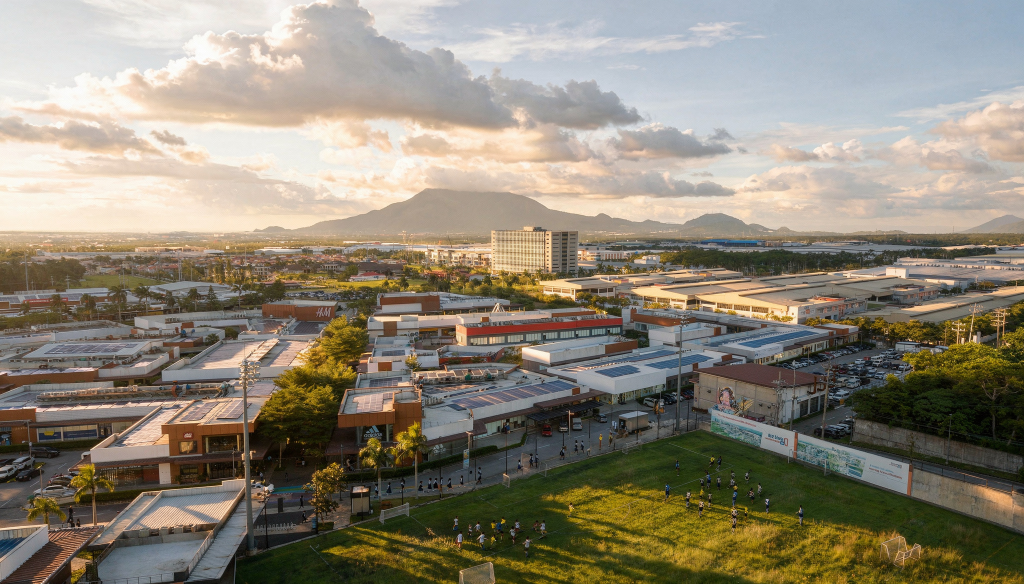
LIMA Estate is a PEZA-registered Economic Estate home to almost 200 investors and provides livelihood to 75,000 individuals. Standing at 1100-hectares, it is the largest privately-owned industrial estate in the Philippines.
The Broader Shift: Rethinking Where Business Gets Done
The growth of LIMA Estate and the development of Biz Hub reflect a larger structural trend unfolding across the Philippines: the gradual but deliberate redistribution of economic activity away from Metro Manila and toward growth corridors that are better positioned to absorb it.
This shift is not driven by proximity alone. It is driven by the recognition that efficiency, livability, and competitiveness are interconnected, and that the environments where businesses operate directly shape their ability to perform. When infrastructure, industry, commerce, and community are planned together from the beginning, the entire system becomes more functional, more resilient, and more capable of sustaining long-term growth.
Aboitiz Economic Estates is engaging investors and business operators through curated briefings and site visits to share Biz Hub’s role within the LIMA ecosystem and the broader case for decentralization.