

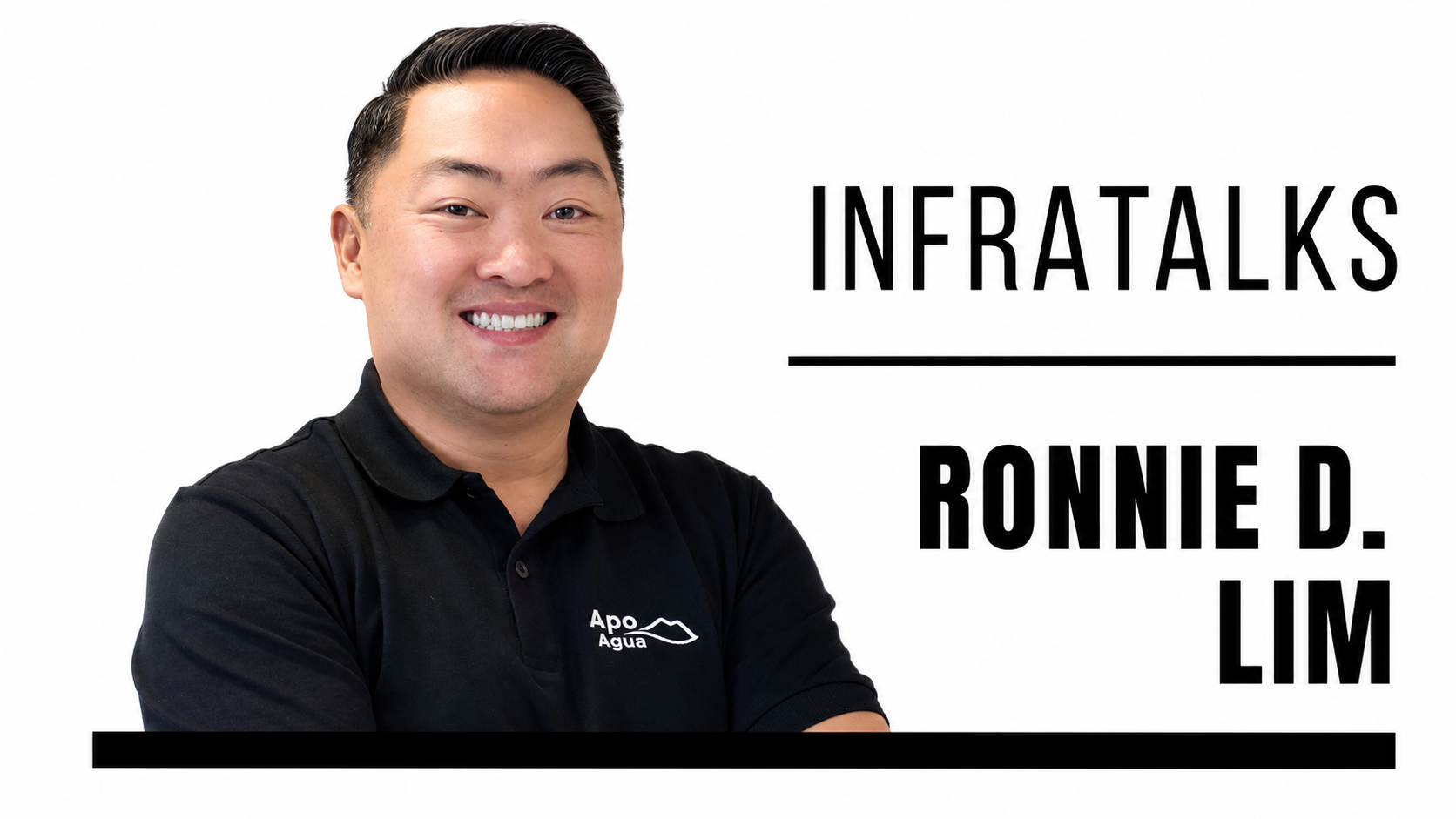
First published in InfraTalks, Aboitiz InfraCapital’s monthly column in The Manila Times.
In the two years since I made Davao City my home, what I appreciate most is experiencing firsthand the incredible, top-tier infrastructure that truly sets this city apart.
Drive around the city today, and you will see signs of progress almost everywhere. The newly opened Ma-a-Magtuod Flyover helps thousands of motorists travel smoothly along one of the city’s busiest diversion roads. More sections of the Davao City Coastal Road have opened, giving drivers an alternative route that reduces traffic and shortens travel time, not to mention the very scenic travel we get along the way. The Davao City Bypass Road, including its 2.3-kilometer twin tube tunnel, continues to take shape, promising faster connectivity across the region. Meanwhile, the Davao-Samal Bridge will connect the Samal beach resorts to Davao City, giving us access to white sand beaches, I estimate, 15-20 minutes from the City Center. And the expansion of the Davao International Airport is expected to further strengthen Davao City’s connection to the country and the world.
But connection is not only about how people and goods move. It is also about the systems that keep the city running, including power. Through partnerships with the private sector, Davao’s power facilities help meet the city’s growing energy needs.
At the same time, I have also seen new economic and residential hubs emerge across the city, such as Davao Global Township in Matina and Azuela Cove in Lanang, creating more spaces for people to live, work, and invest.
Each project serves a different purpose, but together, they support Davao City’s growth and echo what the city’s tagline, “Life is here” stands for.
Having worked in various communities across the Philippines and overseas, I’ve come to see that infrastructure is more than concrete, steel, and engineering. It is a reflection of the community’s aspirations. Every road, bridge, airport, and public utility is ultimately built to make life better– for the worker who wants to get home sooner, the entrepreneur growing a business, the student pursuing an education, and the family seeking a better quality of life.
But among all the infrastructure shaping Davao City today, one of the most important is also the least visible. Water.
The impact of reliable water supply in Davao City
Unlike a bridge or a flyover, people rarely stop to think about where their water comes from. They simply expect it to be available whenever they turn on the tap. In many ways, that is the greatest measure of a water system’s success. When it works well, it becomes something people rarely notice.
Earlier this year, I found myself checking water levels at the Tamugan River more frequently than I normally would. After decades working in the water industry, paying close attention to these changes has become second nature. Every change in weather tells a story, and this year, the story was clear.
The prolonged dry conditions caused by El Niño tested water resources across the country. When the dry months eased, another challenge followed. Heavy rains caused higher turbidity levels in the river, making raw water treatment more difficult. Each situation required a different response, but both called for careful planning, strong operations, and close coordination.
Yet for many Dabawenyos, these challenges remained unseen. Life went on.
Families continued receiving water in their homes. Businesses opened their doors every morning. Hospitals continued caring for patients. Schools carried on with their daily activities.
That quiet resilience did not happen by chance.
It is the result of years of long-term planning, operational excellence, and a strong partnership between the public and private sector to deliver safe and reliable water supply in Davao City.
At the heart of this effort is the complementary use of water sources—groundwater and surface water—allowing the city’s water system to adapt to changing conditions while maintaining a reliable service. This flexibility, through the Davao City Bulk Water Supply Project, helped build a more secure water future for Davao City’s growth. This project is a public-private partnership between Apo Agua Infrastructura, Inc. and the Davao City Water District.
Reliable water supply uplifts lives
More than 2 decades working in the water industry has taught me one important lesson: reliable water supply is more than what comes out of our faucets. It empowers communities and the local economy.
While many parts of the country are facing growing concerns about water availability, Davao City has both groundwater and surface water sources that help support its water needs. With these resources and continued investments in water infrastructure, Davao City is in a good position to meet its water needs in the years ahead — even as its population and economy continue to grow.
The benefits of having a reliable water supply can be seen across different sectors of the city: Hotels can welcome guests with confidence. Restaurants can serve customers without interruption. Hospitals can focus on caring for patients. Real estate agents can sell properties without long explanations as to the water availability in the area.
Schools can maintain a safe learning environment, while manufacturers, offices, and thousands of small businesses can continue their daily operations because one of their most essential resources remains dependable.
This also opens opportunities for Davao City to continue attracting investments and creating opportunities for its residents. Businesses looking to invest consider whether a city has reliable infrastructure, including roads, airports, power, telecommunications, and water. Together, these systems give them the confidence to plan for the future.
And when we enable businesses, we uplift communities.
Adapting from climate change in Davao
At present, one of the biggest challenges we face today is climate change. It reminds us that resilience can no longer be just an afterthought.
Some years will bring prolonged drought, while others will bring heavy rains and different challenges. Preparing for only one scenario is no longer enough.
Cities must build systems that can adapt to changing conditions while continuing to support the people and the businesses that rely on them everyday.
Looking back, I have come to believe that the true measure of infrastructure is not how impressive it looks. It is how to make people’s lives better everyday.
Every new road makes travel easier. Every bridge brings people and communities together. Every airport expansion opens new opportunities.
When we invest in something as vital as reliable water supply, we aren’t just preparing for the future—we are actively shaping a stronger, more resilient home. That is the Davao City we are building together.