

by Suiee Suarez, AboitizPower VP for Corporate Affairs
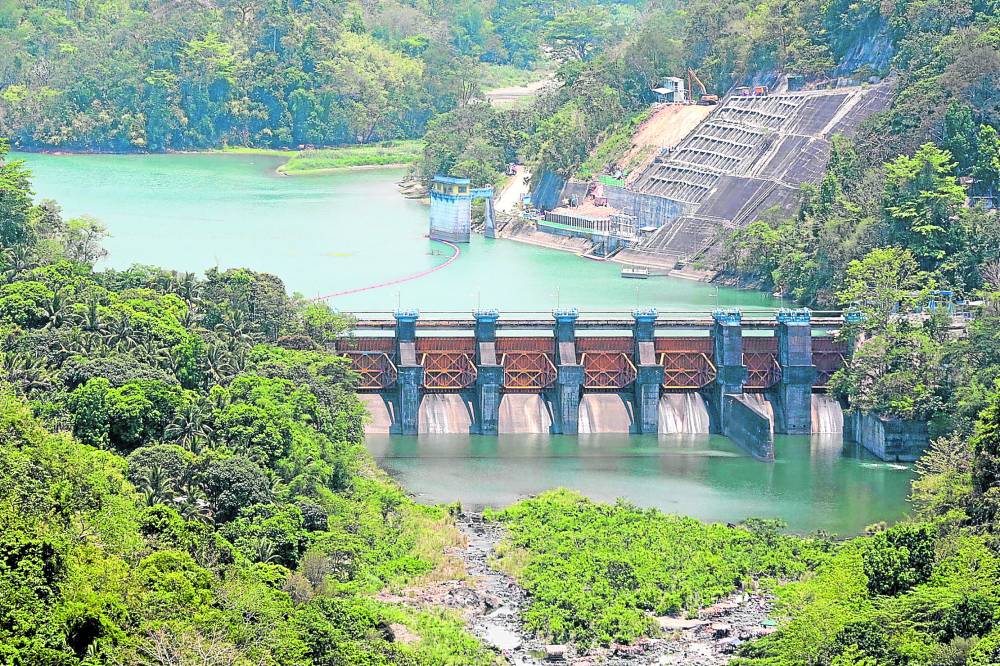
On July 25, 2026, Angat Dam recorded its lowest elevation since it began operations in 1967. But a month later, by the end of August, the water level of Metro Manila’s majority raw water source had climbed by 50 meters due to the southwest monsoon and typhoons that hit Metro Manila and surrounding provinces.
While nearly a month of heavy rains caused urban flooding and class suspensions, that very same deluge delivered relief to key reservoirs like Angat, steadily replenishing watersheds and hydroelectric dams that had dried up during the summer months.
This recent surge of rain highlights a fundamental dynamic in the national energy system: the Philippines’ renewable energy resource base can shift from scarcity to abundance, and from abundance to scarcity somewhere else in the grid. After all, the same clouds that filled Angat Dam also dimmed the sun, reducing the irradiance reaching solar photovoltaic panels.
Grid-wide data bears this out: solar gross generation across the Philippines fell to a year low of 1,039.4 gigawatt hour (GWh) in September to November 2025. This is in contrast to its annual peak of 1,385.1 GWh from March to May 2025.
Hydro moves in precisely the opposite direction, climbing from 2,747.9 GWh in the dry season of March to May 2025 to a peak of 4,083.9 GWh in September to November the same year. Over a full dry-versus-wet comparison, hydro output rises by more than 48% while solar generation drops by a third.
This is a reality of an archipelago that depends on both rainfall and sunlight for power generation, and it repeats every year on a predictable seasonal clock.
The dry summer months present a tough test for grid operators. Summer brings peak electricity demand driven by intense cooling needs, right when dam levels and hydro generation hit annual lows. During those sunny months, solar generation reaches its peak and carries a significant portion of the daytime load. When the Habagat arrives, the dynamic reverses: hydroelectric dams generate abundant power, while solar output plummets under gray skies.
This inverse relationship illustrates why no single renewable generation technology can carry the power grid alone. Solar is weather-dependent and variable by nature, while hydro remains tied to seasonal rainfall. As such, a grid that leans too heavily on any single source, however clean, inherits that source’s weather risk in full.
This is why AboitizPower and the wider power industry keep returning to the idea of a balanced generation portfolio. It is an honest acknowledgment that the grid cannot absorb the swings our climate imposes on us by running on a single source, and that the country’s continued economic growth depends on power that is available every day of the year, not just in the months when a particular resource happens to be abundant.
To manage these seasonal shocks and protect consumers from power shortages or price volatility, the national grid requires reliable and dispatchable energy sources such as geothermal, natural gas, and thermal power to provide the stable foundation needed to meet baseline demand regardless of cloud cover or dam water levels.
A hospital, a factory, or a household needs electricity 24/7, and it is the mix of different energy sources working together, each compensating for the other’s weakness, that makes that possible. It is a complex balancing act that operates in real time against the backdrop of shifting weather patterns.
There is also an infrastructure lesson embedded in the recovery of Angat’s water level: reservoirs that were nearly empty in July are, by end-August, back near its normal high water level partly because storage exists to catch and hold what falls from the sky.
The same principle needs to extend further into our power system through batteries, pumped-storage hydro, and other storage technologies that can bank surplus energy from a strong month of hydro or solar, which are then released during peak demand hours. The Luzon grid already has the Kalayaan pumped-storage units of the 789-megawatt CBK Hydroelectric Power Plant Complex. These serve as large-scale natural batteries and critical energy buffers, equipped with high roundtrip efficiency and low efficiency degradation. Despite its age, the Kalayaan units are capable of doing both short- and long-duration energy storage, and can still do so in the decades to come given proper maintenance and upgrades.
Acknowledging the trade-offs allows us to plan with clarity. None of this is a call to slow down the shift toward renewables — quite the opposite. It is a call to build that shift on a foundation broad enough to absorb the seasonal swings our geography and climate will always produce. By supporting renewables with reliable and dispatchable power generation and energy storage, we can build a resilient, diverse energy mix capable of powering the country through every season.