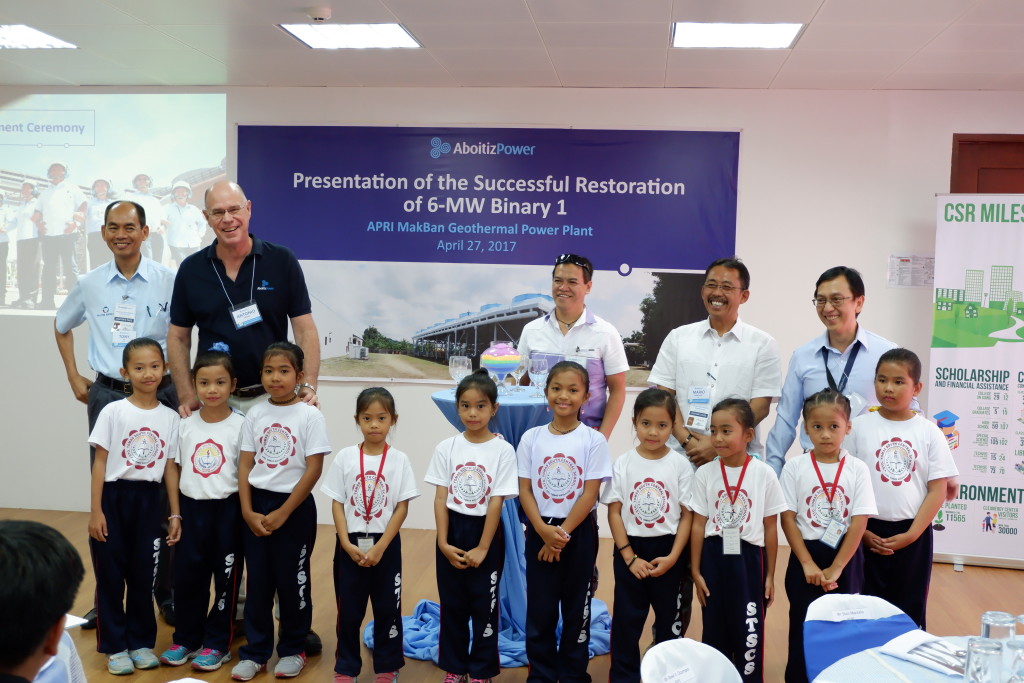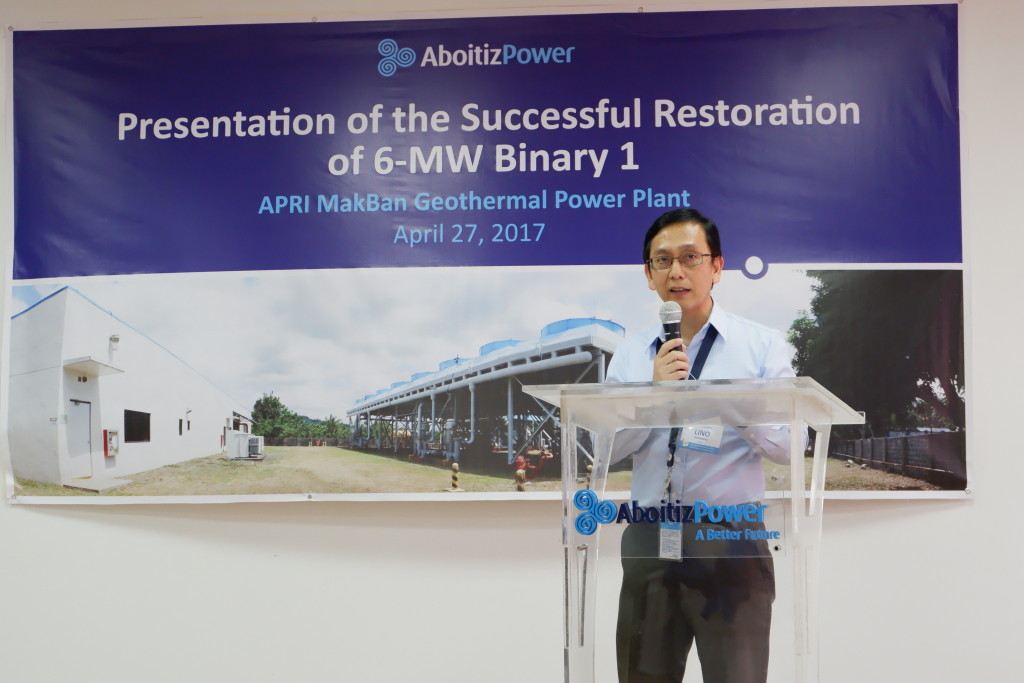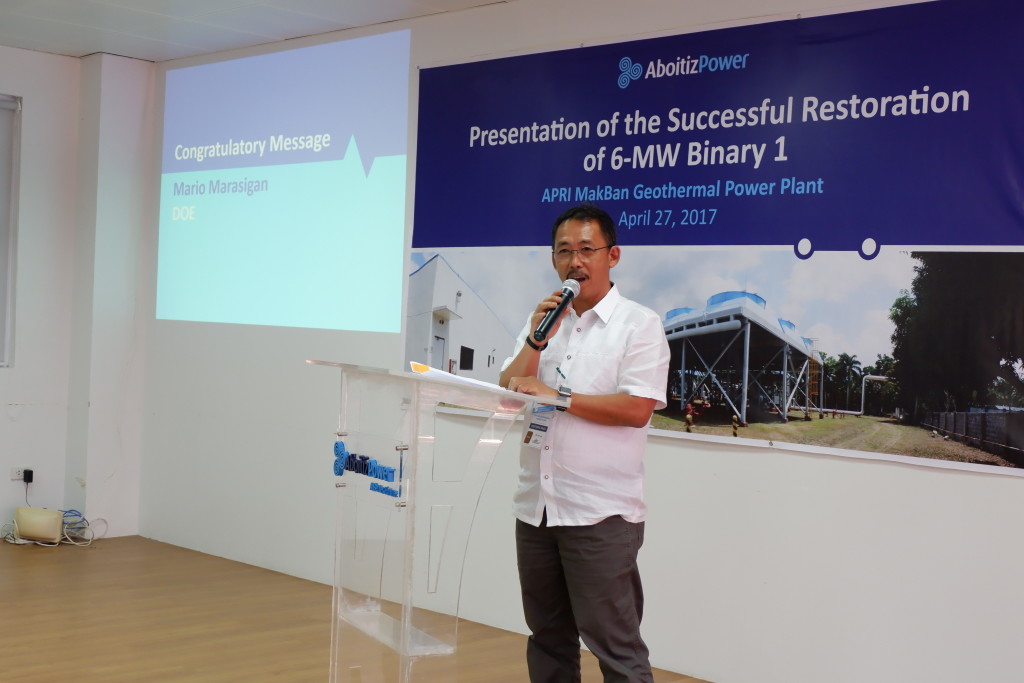

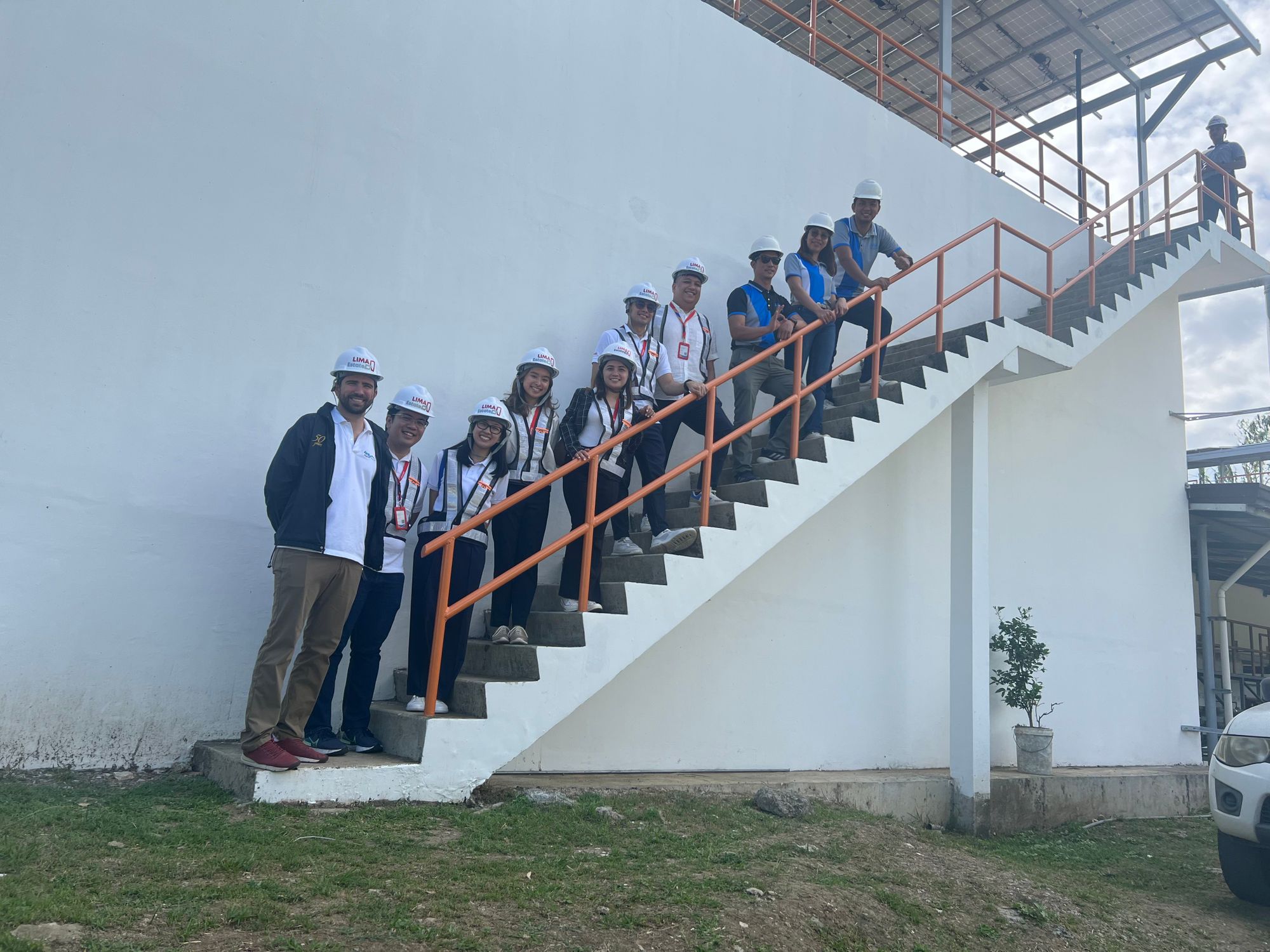
APRI officially presented its 6-MW Binary Plant at the Makiling-Banahaw Geothermal Project last April 27.
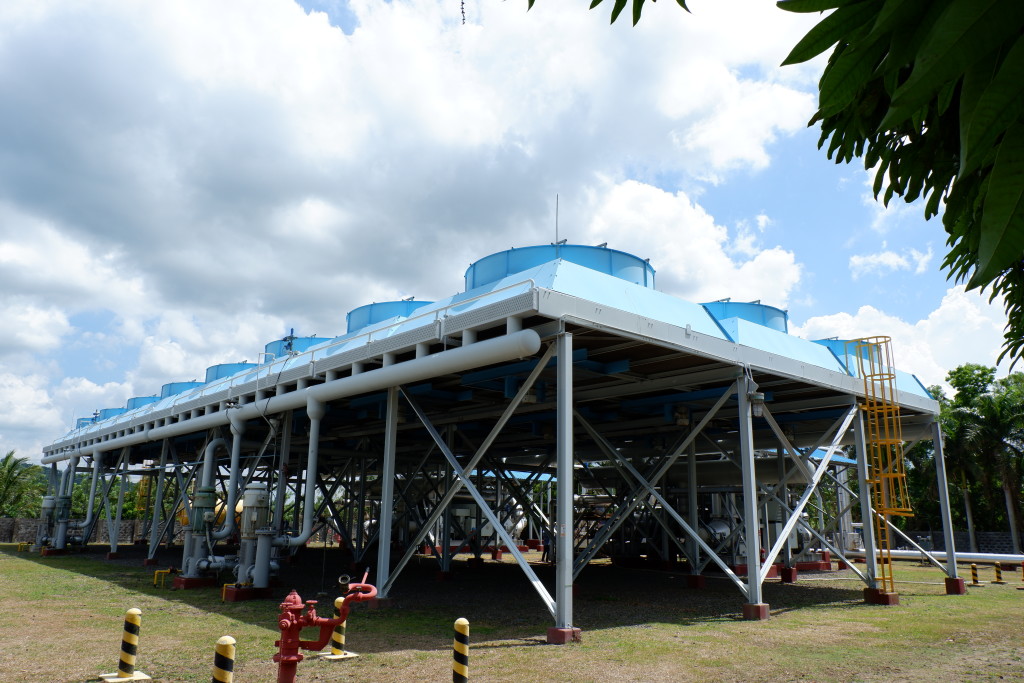
The Binary Plant 1 utilizes excess heat from spent brine to generate clean and renewable energy for the Luzon Grid. It became operational in the second half of 2016 after the completion of restoration work.
“It took us more than a year to complete the restoration, but we were able to add 6 MW installed capacity of renewable energy to our facility, utilizing heat from geothermal byproducts and idle equipment.”
-Felino Bernardo, President and COO, AP Renewables
The Binary Plant 1 is one of three binary cycle power plants in the MakBan Geothermal Project Complex. The binary cycle plants were decommissioned in 2008. Of the three, only Binary 1 was found viable for rehabilitation.
“This plant shows our commitment to renewable energy, through our Cleanergy brand. We have always emphasized that AboitizPower will continue to pursue renewable energy projects for as long as it is sensible and cost-effective for our customers and for us. As we grow our portfolio of power plants, we will always strive to achieve a balance between renewable and conventional energy sources.”
-Antonio Moraza, President and COO, AboitizPower
Geothermal energy comes from the heat of the earth. It is produced by drilling holes into the earth to tap the steam—or the hot water rising to the surface of the earth—from the geothermal reservoirs. At MakBan, the water in the reservoir that is not hot enough is fed into the Binary Plant to still generate electricity.