

MANILA, Philippines — For Aboitiz, building a community does not necessarily begin with homes, shops, or offices. It begins with the economic reason for people and businesses to be there in the first place.
That thinking has shaped decades of industrial estate development and, increasingly, a broader approach to real estate for Aboitiz Economic Estates and Aboitiz Land.
At its core is a simple sequence: investment creates businesses, businesses create jobs, and jobs create sustained demand for places to live, work, learn, shop, and spend time.
Aboitiz calls this its jobs-first, industry-anchored approach. Rather than treating industrial, commercial, residential, and institutional development as separate real estate categories, the model considers how each can reinforce the economic ecosystem around it.
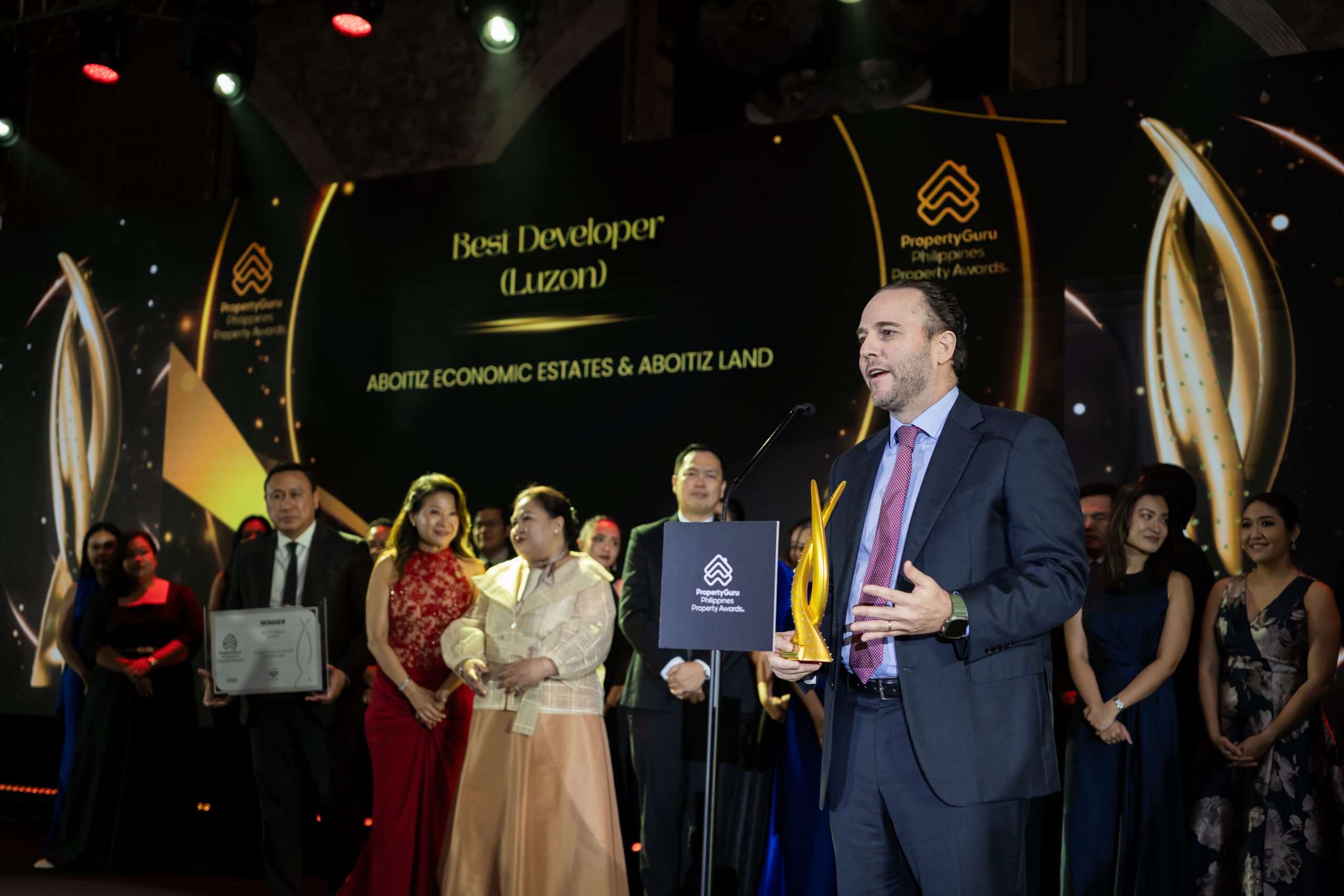
That development philosophy received recognition across six categories at the 14th PropertyGuru Philippines Property Awards, where Aboitiz Economic Estates and Aboitiz Land were named Best Developer (Luzon). Aboitiz Economic Estates was also named Best Industrial Developer for the sixth consecutive year and Best Sustainable Commercial Developer.
Three developments completed the roster of wins: TARI Estate as Best Industrial Estate Development, Biz Hub at LIMA Estate as Best Completed Mixed Use Development, and The Villages at LIMA Estate as Best Lifestyle Housing Development.
For Aboitiz, the breadth of those recognitions is significant because a philosophy long rooted in industrial real estate is increasingly being recognized as a benchmark for integrated development.
“Our industrial roots taught us to begin with the fundamentals: investment, infrastructure, jobs, and real economic demand,” said Rafael Fernandez de Mesa, President and CEO of Aboitiz Economic Estates and Aboitiz Land. “When those foundations are strong, other parts of a community have a reason to grow. Our role is to understand that progression and build for it.”
The economic engine comes first
Industrial estates have traditionally been viewed as specialized real estate: places for factories, warehouses, and logistics operations.
Aboitiz’s experience has shown that their impact can extend much further. Across its economic estates, the company supports more than 260 locators, over 100,000 jobs, and PHP175.4 billion in investments. The scale of that activity creates economic demand that does not stop at the factory gates.
Workers need housing and transportation. Companies require offices and services. Growing populations create demand for retail, restaurants, healthcare, recreation, and education. As incomes and economic activity deepen, the requirements of the surrounding community become more sophisticated.
The result is a development model in which industry functions not as an isolated land use, but as an economic engine around which a more complete community can develop.
LIMA Estate shows what happens when the engine matures
The clearest expression of that progression is LIMA Estate in Batangas.
What began three decades ago as an industrial development has grown into an integrated economic community combining industry with business, residential, education, hospitality, retail, and lifestyle uses.
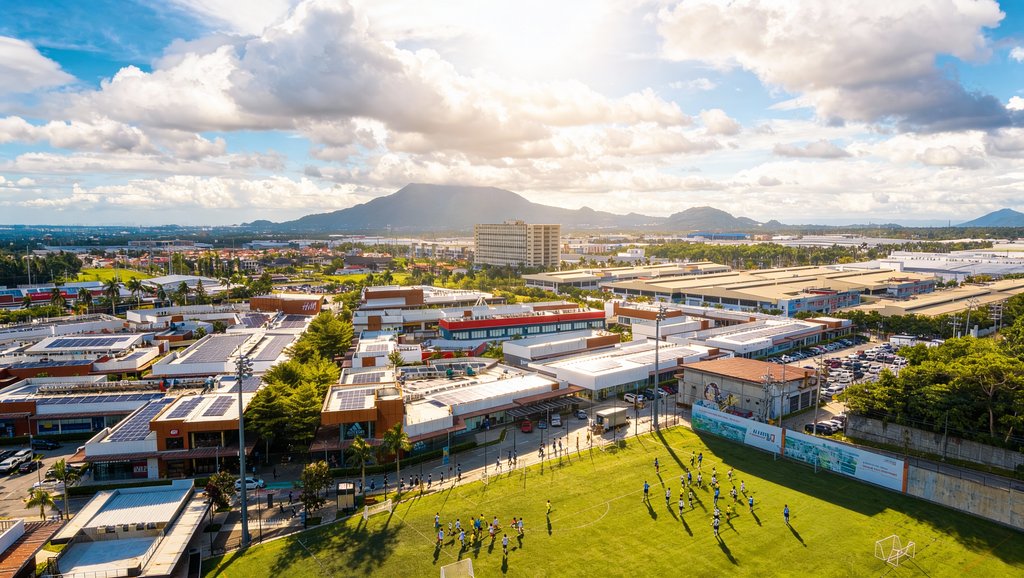
Its commercial district, Biz Hub at LIMA Estate, illustrates the demand created by that evolution.
Named Best Completed Mixed Use Development, Biz Hub at LIMA Estate brings together offices, retail, hospitality, education, and other services within an estate anchored by a substantial base of businesses and workers.
Its development is therefore closely tied to the economy already operating around it. Commercial uses serve companies, employees, residents, students, and visitors, while continued industrial growth expands the market that supports those uses.
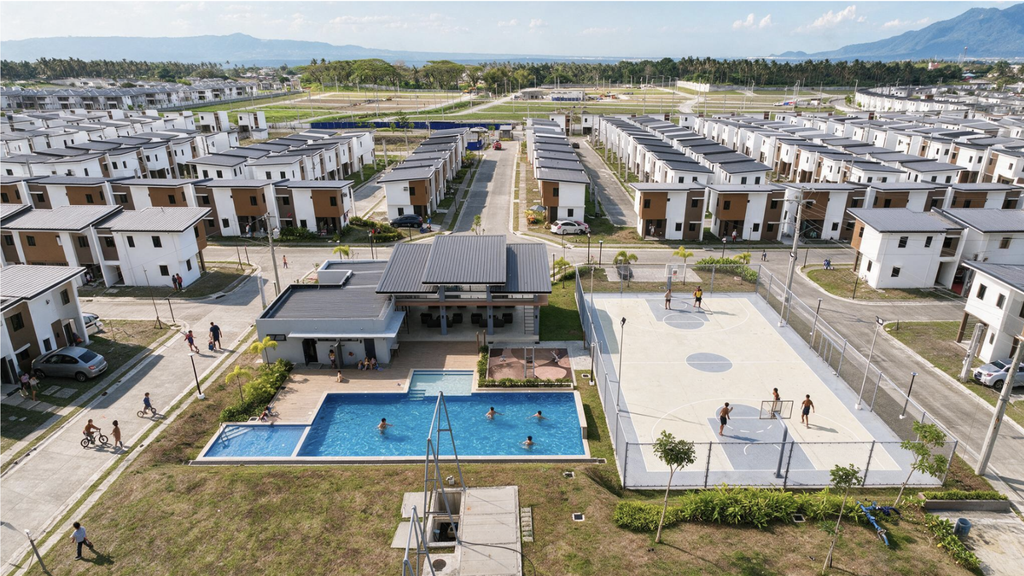
Housing forms another part of the same equation. The Villages at LIMA Estate, named Best Lifestyle Housing Development, gives families more than proximity to employment. It places everyday life within reach of the wider LIMA ecosystem, from schools, retail, dining, and leisure to hospitality, open spaces, and essential services.
That creates a different residential proposition: a community where work, learning, recreation, and daily needs are better connected, allowing residents to spend less time moving between destinations and more time living within a complete, evolving environment.
Together, Biz Hub and The Villages at LIMA Estate show how industrial growth can translate into a fuller urban experience, where economic opportunity and quality of life reinforce each other.
Experience becomes an execution advantage
If LIMA Estate demonstrates what the model can become over decades, TARI Estate in Tarlac shows how accumulated experience can accelerate its next iteration.
The 384-hectare estate, named Best Industrial Estate Development, is strategically positioned in Central Luzon and along the Luzon Economic Corridor, with access to major transport infrastructure and economic gateways.
But location alone does not create an industrial ecosystem. It requires the ability to convert land into an investment-ready environment through shovel-ready sites, integrated infrastructure and utilities, estate operations, government coordination, locator support, and long-term planning.
Aboitiz is applying decades of industrial development experience to TARI Estate, allowing the estate to move from greenfield development toward an emerging industrial platform in a relatively short period.
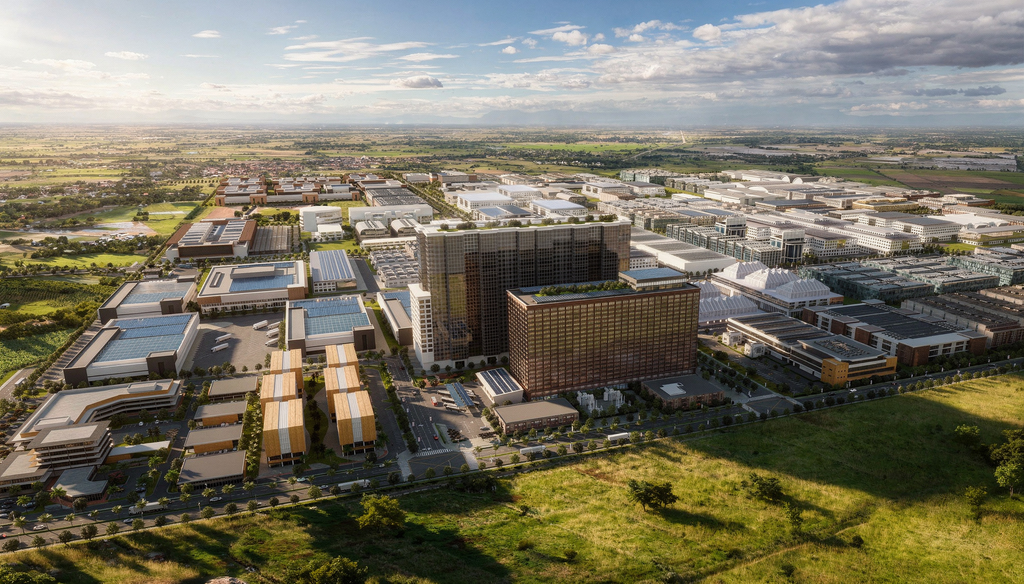
Major investments from companies including Ajinomoto Philippines and Coca-Cola Europacific Aboitiz Philippines are establishing its industrial base, while the estate is projected to support around 60,000 jobs as it matures.
TARI Estate therefore represents more than expansion into another geography. It demonstrates how an established development capability can be deployed at speed in one of the country’s emerging industrial corridors.
Building value that lasts
The model also changes how Aboitiz defines sustainability. Aboitiz Economic Estates’ recognition as Best Sustainable Commercial Developer reflects an approach that considers not only how developments perform environmentally, but also what allows their economic ecosystems to remain competitive over time.
That includes investments in renewable energy, water and resource management, sustainable mobility, resilient infrastructure, and responsible estate operations.
Increasingly, it also includes talent sustainability. As industries become more technologically sophisticated, the availability of workers is only part of the competitiveness equation. Businesses also need access to skills that evolve with their requirements.
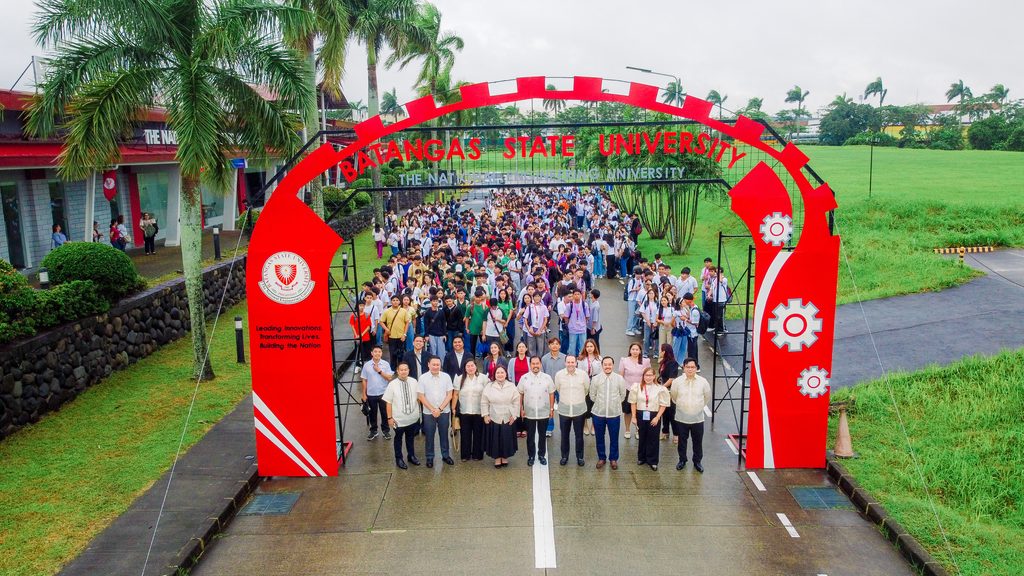
This has led Aboitiz Economic Estates to deepen partnerships between industry and education, including the opening of the Batangas State University LIMA Campus within Biz Hub at LIMA Estate. The campus brings engineering education closer to the companies and employment opportunities within the estate, supporting a longer-term pipeline of industry-relevant talent.
The same principle applies to physical infrastructure and human capital: sustainable development is ultimately about protecting the conditions that allow value to endure.
From individual projects to interconnected economies
Taken together, the recognition spans nearly every dimension of the development model Aboitiz is advancing: from the industrial engine and sustainable estate operations to mixed-use districts, homes, and overall development capability.
For Aboitiz, that breadth reflects where its real estate platform is heading.
Industrial development remains the foundation. But the capability built around it is increasingly being applied to a wider question: how do you create places where economic growth and community development reinforce each other?
The answer begins with jobs, but it does not end there.
“A successful estate ultimately has to work for the businesses investing in it and for the people building their lives around it,” Fernandez de Mesa said. “When those two things reinforce each other, real estate becomes more than a collection of developments. It becomes a platform for long-term regional growth.”
As investment continues to move beyond traditional metropolitan centers, Aboitiz sees an opportunity to build more of these platforms across the country.
The formula is deliberately straightforward: create the economic engine, execute the infrastructure that supports it, and build the places and communities that allow its value to compound over time.
What began as an approach to building industrial estates is increasingly being recognized as a model for building integrated centers of growth.