

Comments by Endika Aboitiz on
Francis Fukuyama’s “Political Order and Political Decay”
“I reserve the right to change my mind the moment after I made it if new information comes to light.” – Manuel Senillosa
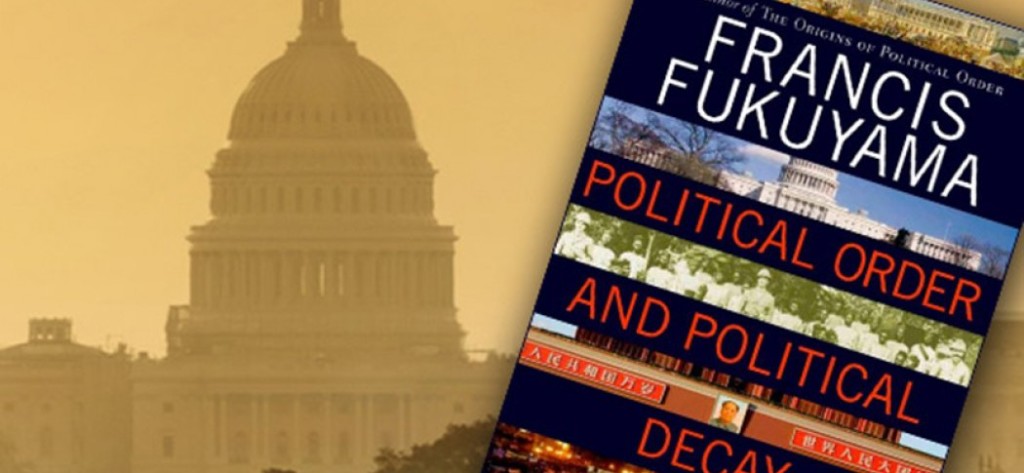
From Francis Fukuyama’s book on political decay I have put together this extract for you to reflect on. One of the subjects that have fascinated me since I was young was why people were stupid enough to hang on to beliefs in the light of overwhelming evidence to the contrary. This extract, which I have simplified, explains it in very simple form. I have found fascinating to observe people living their lives on certain beliefs driving certain behavior, knowing in their gut that it has to be untrue.
We Catholics are victims of beliefs surely created to control our behaviours. The more intelligent of us have to know they are false. All it takes is a little research. The less intelligent have to be forgiven as the stories have been ingrained in them since they were in their mothers’ wombs. There is no doubt today that they were just that—stories.
Why do institutions fail to adapt to change?
01. Cognitive
Man follows institutional rules for reasons that are not entirely rational. Many, if not most religious rules take their roots in functional needs e.g. the need to regulate sexuality and reproduction. Fervent religious believers will not abandon their believes simply in the face of evidence that they are bad or wrong.
Everyone creates and uses shared mental models of how the world works and sticks to it even in the face of clear, contrary evidence.
We know that the New Testament’s contents where chosen in Nicaea, 300-plus years after Christ died. We know the pieces that comprise it were written decades after Christ died and probably by people that did not know him. It is impossible that it be accurate, yet we swear by it. We know it is the basis for one of the larges hoaxes in human history – Catholicism. Yet so many run their lives based on it.
02. The Role of Elites or Incumbent Political Actors within the Political System
Political institutions develop as new social groups emerge and challenge the existing equilibrium. If they are successful, the rules change. Outsiders become insiders.
Insiders then acquire a stake in the new system and act to defend the status quo. Insiders can use their access to information and resources to manipulate the rules to their favour.
Human sociability is based around the twin principles of kin selection and reciprocal altruism—the favoring of family and friends with whom one has exchanged favours.
We see many examples in our own local environment: of institutions that have failed because they have not allowed new professional talent to enter their enterprises to favor family and friends. They have hence not adapted to change and are slowly withering away in front of their own eyes because their institutions were not strong enough to resist elite and political capture.
Our policy of a retirement age resists elite capture. Meritocracy is among the strongest of institutions we can continue to strengthen.
The Mamluk slave soldiers legitimized themselves by defending Egypt and Syria against the Mongols and the Crusaders and became an entrenched elite. The older Mamluks blocked upward mobility. Their disdain for firearms prevented their military modernization resulting in their fall against the Ottomans.
The Catholic Church has survived and triumphed over 2,000 years because their organizational & branding genius and their uncanny ability to change exactly when they need to so as not to lose market share. We see that change in motion today with this new pope that is both a rock star and a visionary. The Catholic system produces these change agents every so often, and that keeps them evergreen.
Our system at Aboitiz is the result of an evolution that has always adapted to change. We must protect this evolutionary design to make sure that we remain dynamic and evergreen so that we don’t wither.