

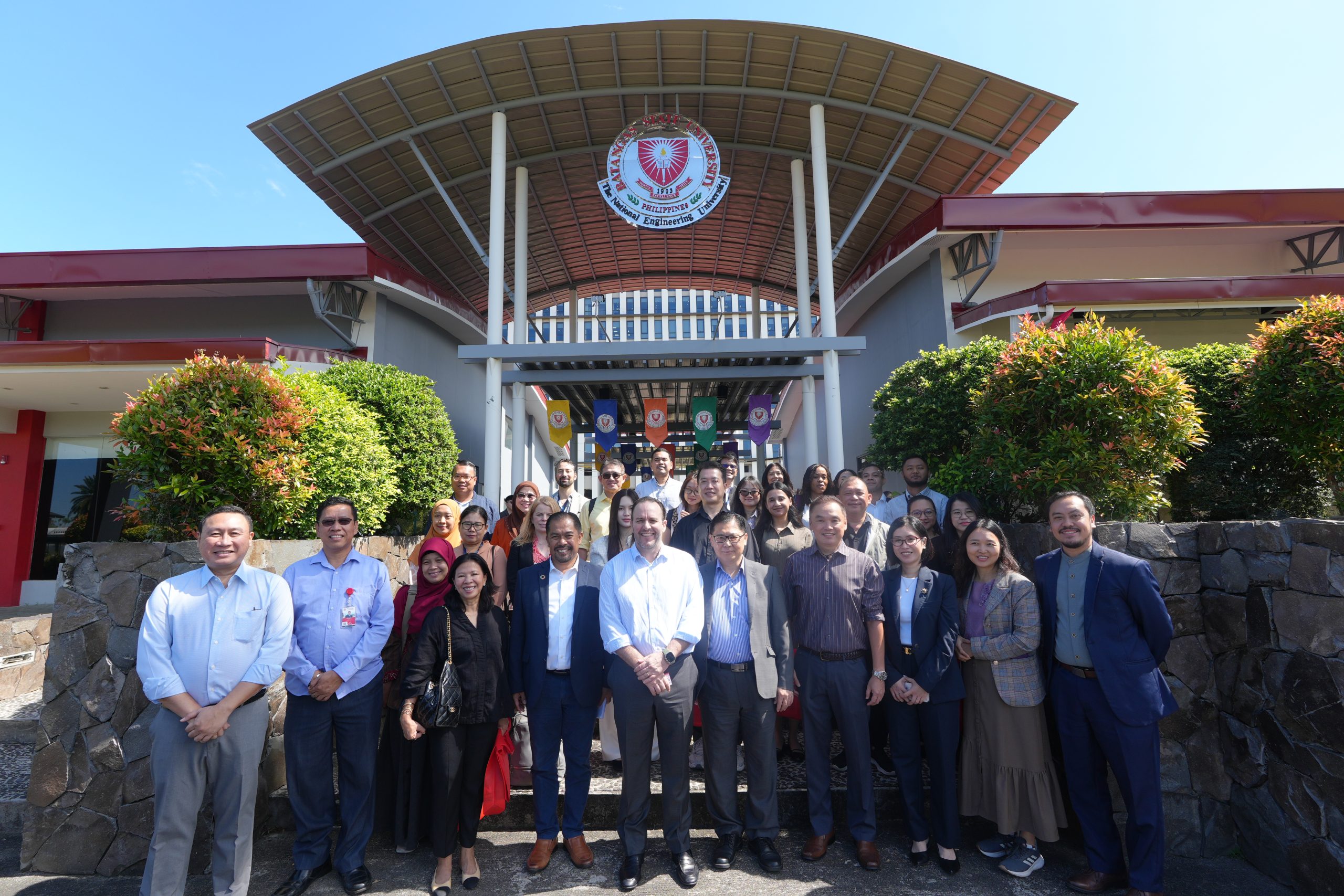
Organized by UNCTAD, the visit highlighted how integrated industrial ecosystems support investment in technology, skills, knowledge, and other intangible capabilities.
LIPA-MALVAR, Batangas, Philippines – Government, industry, and international organization representatives participating in the ASEAN FDI Policy Workshop 2026 visited LIMA Estate on November 17 to examine how integrated economic estates facilitate investments in intangible assets and higher-value industrial activities.
Organized by UN Trade and Development (UNCTAD), the workshop focused on FDI and intangible development across ASEAN. The visit featured Aboitiz Economic Estates’ flagship Batangas development as an operating case study of how industrial ecosystems can support capabilities beyond physical infrastructure.
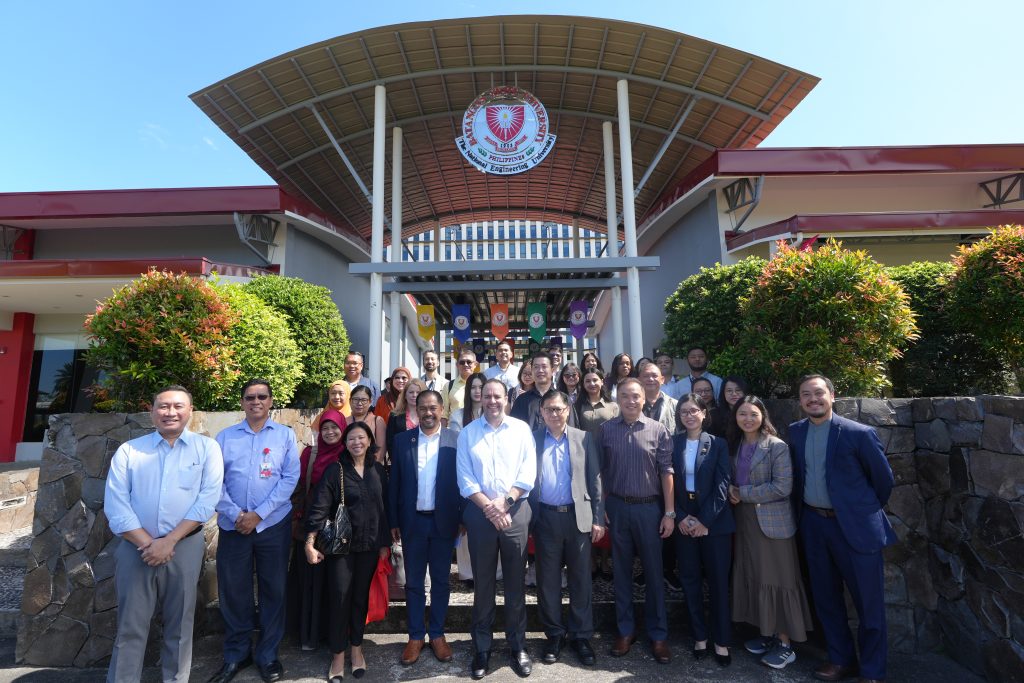
Members of the ASEAN delegation, led by the United Nations Conference on Trade and Development (UNCTAD), gather with key leaders of Batangas State University during their visit to its campus inside LIMA Estate in Batangas
As regional competition shifts toward more complex manufacturing, industrial competitiveness increasingly depends on intangible investments, such as workforce skills, technology adoption, technical knowledge, organizational capabilities, and streamlined business processes.
The engagement provided an opportunity for Aboitiz Economic Estates to share practical experience in operating industrial ecosystems where infrastructure, investor services, and institutional partnerships can support companies throughout their investment journey.
Aboitiz Economic Estates is adopting the integrated development model established at its flagship Batangas property across its portfolio, most recently, TARI Estate in Tarlac. Bookending the Luzon Economic Corridor, the two estates position the company to support higher-value industrial investments across one of the Philippines’ promising growth regions.
Intangible assets in practice
To see how these capabilities operate in practice, the delegation toured four stops across the estate representing different components of intangible investment.
At the Batangas State University (BatStateU)–LIMA campus, delegates observed how industry-based learning and curriculum collaboration align academic training with technical talent needs. Complementing this setup is the university’s Industry Advisory Council (IAC), which brings the academe, estate locators, and industry experts together to co-create curricula to equip graduates with skills that match the evolving demands of Philippine industries.
During the visit, UNCTAD Senior Economist Dr. Wee Kee Hwee highlighted the collaborative partnership between academic institutions and estate locators in developing industry-aligned talent.
“I’m particularly impressed with the university inside the estate and how the universities and the other stakeholders are working together in developing programs,” Dr. Hwee said. “We have companies developing programs jointly with the universities that suit their needs, and it is also good for the students as well. I think that’s a great model,” he added.
This pioneering partnership between Aboitiz and BatStateU places education directly within an industrial setting, immersing students in actual workplace operations to support workforce readiness. Since opening earlier this year, the interim campus has welcomed nearly 1,000 first-year engineering students, an important milestone in supporting the local talent for the estate and its surrounding communities.
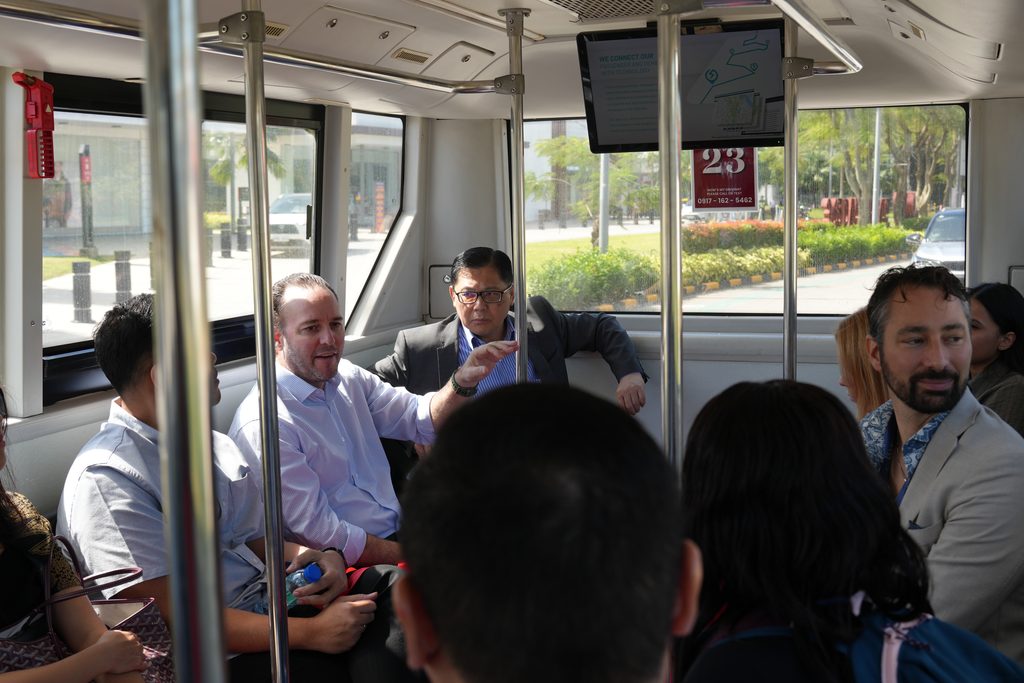
(Left-center) Aboitiz Economic Estates President and CEO Rafael Fernandez de Mesa provides an overview of LIMA Estate’s integrated industrial ecosystem to members of the UNCTAD and ASEAN delegation in Batangas.
The itinerary also included a visit to JTI’s manufacturing facility, JT International Asia Manufacturing Corp. (JTI-AMC), where delegates explored how advanced production technologies are supported by technical expertise, workforce competencies, and operational know-how. In addition to the facility’s 23 export markets worldwide, JTI’s LIMA Estate plant recently expanded its capabilities through a PHP2.1-billion investment in advanced processing technologies, including the company’s first Dry Ice Expanded Tobacco (DIET) plant in Southeast Asia.
The delegation also visited Conduent, a business process outsourcing (BPO) company that supports global operations in customer experience management, finance, accounting and procurement, human capital, and integrated document solutions, while demonstrating knowledge-intensive services, digital capabilities, and regional talent development. Since opening its first Southern Luzon site at LIMA Tower One in 2025, the 96,000-square-foot facility has grown to nearly 1,500 employees, underscoring Batangas’ emergence as a next-wave IT-BPM hub.
Rounding out the tour was the AboitizPower–JERA Global Technical Center of Excellence (GTCOE), a joint initiative built on the strategic partnership between AboitizPower and JERA, Japan’s largest power generation company. Launched in September 2025, the GTCOE serves as a hub for developing world-class technical talent for both companies and the broader energy industry.
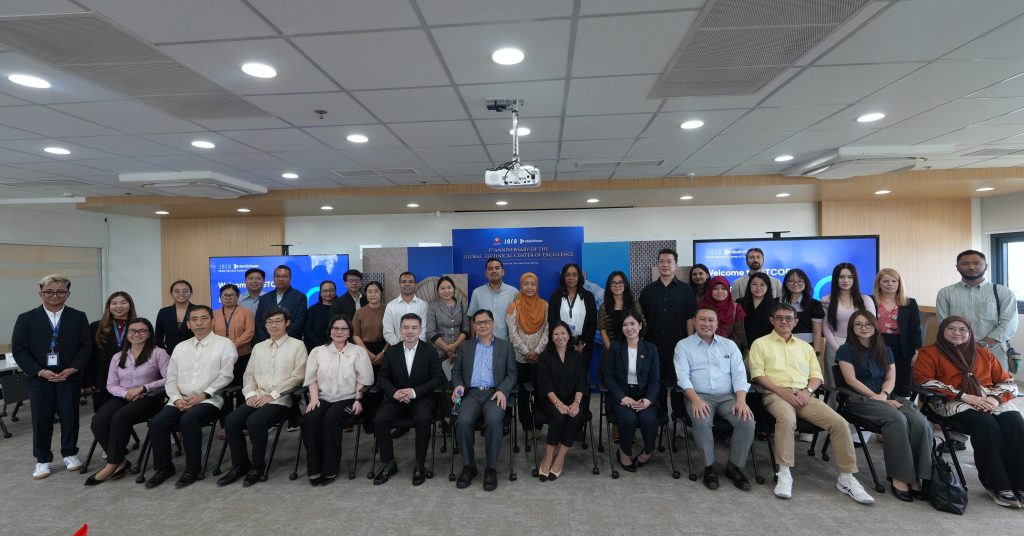
ASEAN delegates join representatives of the AboitizPower–JERA Global Technical Center of Excellence (GTCOE) during their visit to LIMA Estate in Batangas. The engagement highlighted how international technical partnerships support specialized skills development, knowledge transfer, and the operational expertise needed for increasingly sophisticated energy systems.
Bringing together AboitizPower’s operational experience and JERA’s global technical expertise, the GTCOE provides structured technical education, hands-on operations and maintenance (O&M) training, and cross-border knowledge exchange. Through this partnership, the GTCOE has delivered more than 2,000 training and capability development engagements across its programs.
An integrated ecosystem supporting business growth
Following the site visits, Aboitiz’s estate leaders engaged the UNCTAD delegation by sharing how the estate’s operating model supports investment beyond initial site development, combining infrastructure with ongoing investor assistance and capability-building partnerships.
Spanning approximately 1,100 hectares across Batangas, LIMA Estate is home to more than 200 locator companies operating within an industrial community supported by utilities, business services, and commercial developments designed to help investors establish and expand their operations.
A key example is EaseBiz, a joint investment facilitation initiative of Aboitiz Economic Estates and the Philippine Economic Zone Authority (PEZA). Through coordinated guidance on registration requirements and related processes, EaseBiz helps locators navigate the establishment journey with greater clarity.
Alongside its industrial zones, LIMA Estate integrates commercial, residential, and lifestyle developments that help locators attract and retain talent while supporting surrounding communities.
“Hosting the UNCTAD delegation and ASEAN industry representatives allowed us to put forth how an integrated township supports locators well beyond land and infrastructure,” said Aboitiz Economic Estates President and CEO Rafael Fernandez de Mesa.
“Industrial competitiveness is increasingly shaped by the ecosystem surrounding businesses as much as the facilities they build. At Aboitiz Economic Estates, we continue to strengthen that ecosystem by bringing together dependable utilities, investor support, workforce development, and industry partnerships that help businesses establish resilient operations and create long-term value,” he said.
As investment opportunities continue to emerge across the Luzon Economic Corridor, Aboitiz Economic Estates remains focused on developing integrated industrial townships that support higher-value industries through a solutions-provider approach. By connecting infrastructure with essential services, educational institutions, commercial amenities, and strategic partnerships, the company continues to create investment-ready environments that contribute to the Philippines’ long-term industrial competitiveness.